
A beaver dam is active when the beavers are still working on it. Look for freshly cut wood on the crest, wet mud packed into the gaps, water held at a steady level and recent signs along the banks. To confirm it, we cut a small test notch through the crest, about as wide as a boot and about 2 inches deep. If the beavers close that gap overnight, the dam is active.
What does an active beaver dam look like?
An active dam shows recent work, whatever its size. Old dams weather grey and slump. A working dam has pale, freshly chewed sticks, mud still wet in the joints and a crest that has been topped up recently. Check the water too: a pond that holds its level after rain is usually being maintained.
| Sign | Active dam | Likely abandoned |
|---|---|---|
| Wood on the crest | Pale, freshly cut, recently chewed | Grey, weathered, slumped |
| Mud in the gaps | Wet, smoothed, packed in | Dried, cracked, washed out |
| Water level | Holds steady after rain | Dropping, leaking through gaps |
| Around the pond | Fresh slides, tracks, cut stems | Little new cutting, older growth |
| Lodge | Dome-shaped, entrances underwater | Collapsed or unused |
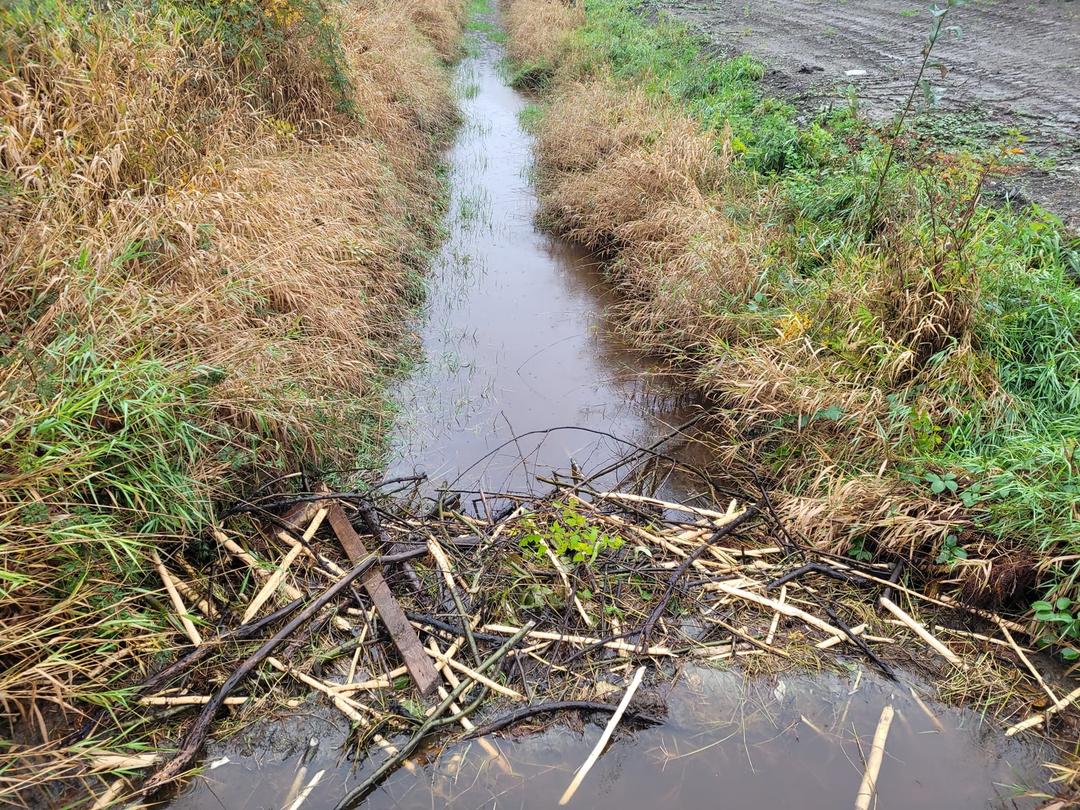
The lodge is often the hardest sign to find. Lodges are dome-shaped structures of sticks and mud with a large chamber above the water line, and their entrances are underwater (University of Kentucky Forestry and Natural Resources). Because a lodge can be out of sight, we judge activity from the dam itself.
Can you notch a beaver dam to test it?
The notch is how we check activity, but check the rules before you cut anything. Breaching, removing or otherwise altering a dam can need provincial authorization, and the answer depends on the dam, the water body and who owns the land. Read the rules and permits for notching or removing a beaver dam in BC first.
The notch is a test, not a removal. We keep it about boot-wide and about 2 inches deep: just enough for the water to make noise.
What does the overnight check tell you?
Go back the next morning and look at the notch. If it has been closed and the water no longer runs through, the colony is maintaining the dam. If the notch is still open and water runs freely, the dam may no longer be maintained. One open notch is not conclusive on its own, so repeat the check before drawing conclusions.
An unmaintained dam still deserves a close look. When a dam starts to fail, the sediment held behind it can wash out and reshape the channel quickly.
Why check activity before choosing a fix?
Whether a dam is active decides what comes next. An active dam backing water onto a road, field or building usually calls for flow control, such as a pond leveler that holds water at a safe level while the colony stays in place. An abandoned dam may need little more than monitoring. Our beaver dam flooding and pond levelers and flow-control devices pages cover these services.
On our Clapperton Creek project in the Nicola watershed, we installed pond levelers in three beaver dams. For work across the BC Interior, including around our operating base just south of Revelstoke, see our beaver control hub for the BC Interior.
What about beaver deceivers at culverts?
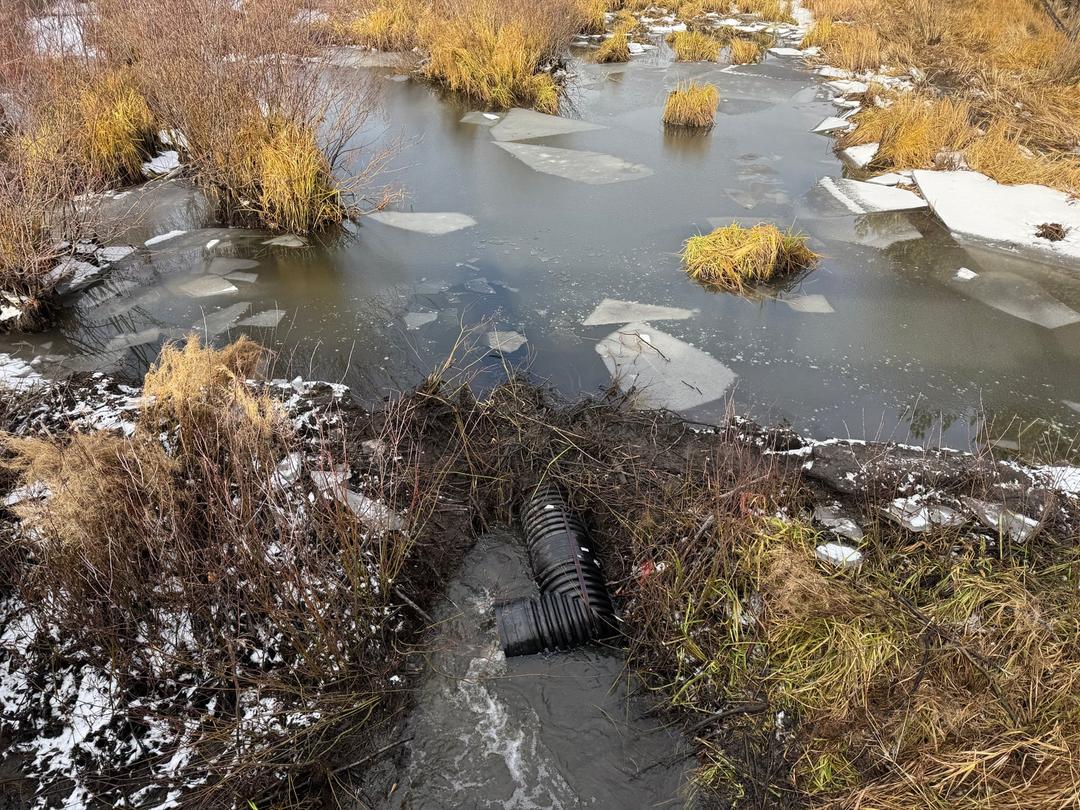
Beaver deceivers are stock devices set at a culvert to keep beavers from plugging it. Their limits are practical: many are undersized for spring runoff, beavers and debris can block them, and they need regular clearing. We do not install beaver deceivers. At culverts we use our own designs: combo devices, which are an exclusion fence with a pond leveler through it, sized to each crossing, and our own levelers fitted to the culvert with an installation method we developed, which is beaver-proof and guaranteed. Our culvert protection page explains how that applies.
What to do next
- Note where the water is and whether the level is rising.
- Check the signs in the table above around the whole pond, not only one side.
- Check the provincial rules before making any notch.
- Recheck the notch the next morning, and again after rain.
- Arrange a site assessment before choosing a fix, especially where a road, culvert or field is affected.
Sources
- University of Kentucky Forestry and Natural Resources, Beaver (extension page): https://forestry.mgcafe.uky.edu/beaver_damage
Common questions
Can a beaver dam be active if I never see beavers?
Yes. Beavers spend much of their time out of sight, and lodge entrances are underwater, so not seeing animals tells you little. Look for repair work, fresh cutting and a pond level the dam is holding.
What if the notch is still open the next morning?
An open notch suggests the dam may not be actively maintained, but one check is not conclusive. Repeat the test, including after rain, before deciding on a fix.
Do I need authorization before notching a beaver dam in BC?
Breaching, removing or otherwise altering a dam can need provincial authorization. Review the rules page before you cut anything, because the answer depends on the dam, the water body and the land.
Does an active beaver dam always need to be removed?
No. An active dam can often be managed with a pond leveler or other flow-control device that holds water at a safe level while the colony stays in place. Removal is one option among several, not the starting point.
What should I do if a beaver dam is flooding a road?
Contact the road authority or municipality responsible for the road, then arrange a site assessment to confirm whether the dam is active and where the water is backing up. The assessment shapes the fix.