
A creek that matters to salmon, and a beaver conflict that kept coming back
Clapperton Creek drains a chain of upland lakes in BC's Interior, between Kamloops and Merritt, and feeds the Nicola River. Each fall the Nicola runs low and warm just as salmon need it most. Control structures on the lakes are there to hold water through the summer and release it in the fall.
For years the beaver dams between those lakes were treated as the problem. They slowed the fall release, so they were pulled, and the beavers rebuilt them. It was the same cycle we see on drainage networks everywhere: crews on site every season, and the conflict never really settled.
Our salmon conservation partners and the provincial water ministry wanted to know whether the beavers could be turned from a problem into part of the solution.
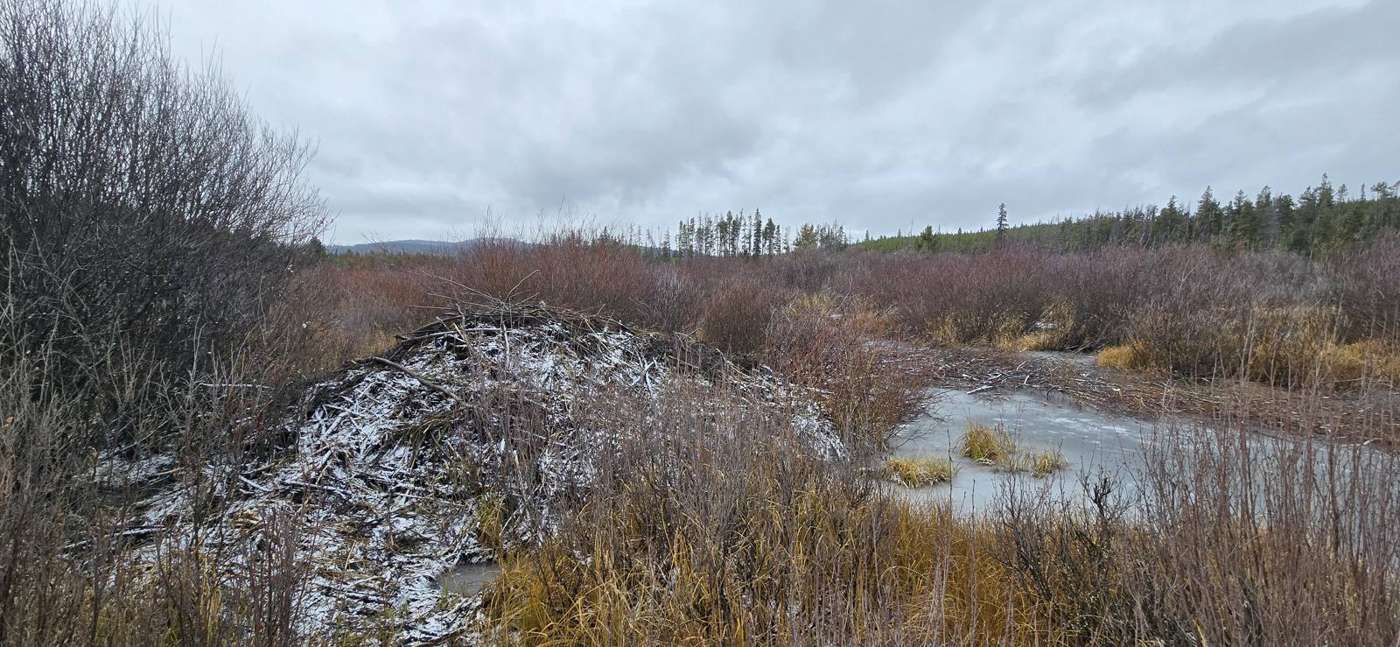
Why the beaver wetlands were worth keeping
The beaver wetlands turned out to be holding something valuable. In late summer, water stored in these beaver-built wetlands stays below 10°C, while the open lake water above them runs over 20°C. Salmon need cold water to spawn. The beavers were already building the storage. What was missing was a way to control when it is released.
We call this approach beaver-enhanced groundwater engineering. The beavers maximize the water stored in the wetland, and our devices release it on a schedule that suits the fish rather than the beavers.
Variable pond levelers in three dams
We installed variable-flow systems, built on our variable pond leveler design, in three major dams between Helmer Lake and Sussex Lake. A standard pond leveler drains continuously from the day it goes in. Ours has an adjustable outlet: turned up, it holds the water; turned down, it releases it at a set rate.
That difference matters to the beavers too. A standard leveler starts discharging the moment it is installed, which beavers can sense and work against. With the outlet turned up, the pipe gives the beavers no reason to treat it as a leak, so they settle around it and keep building.
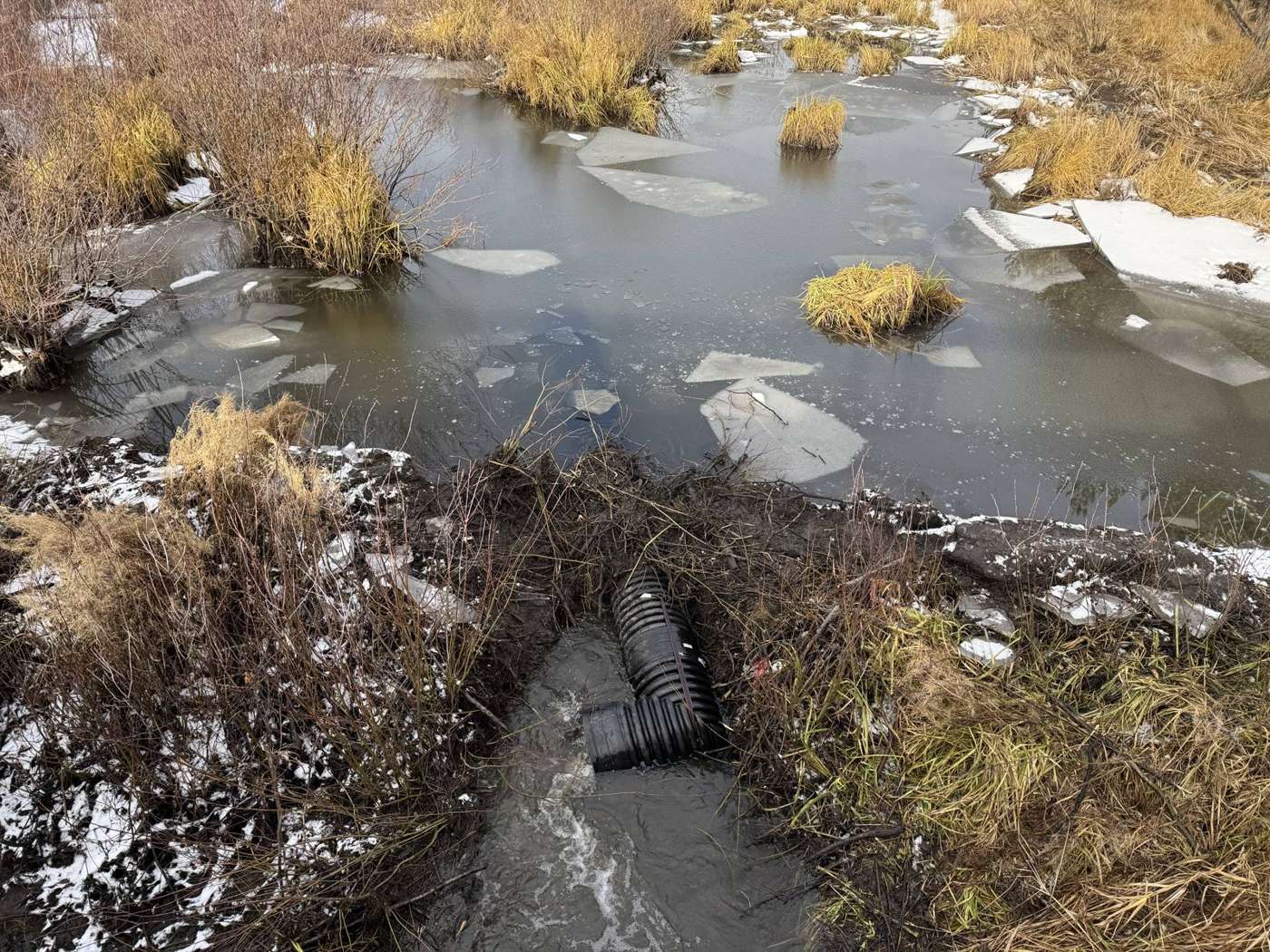
The largest system went into the dam at the road bridge. The two upstream dams were fitted with their pipes in place and their outlets capped, which works the same way as a coupler turned fully up.
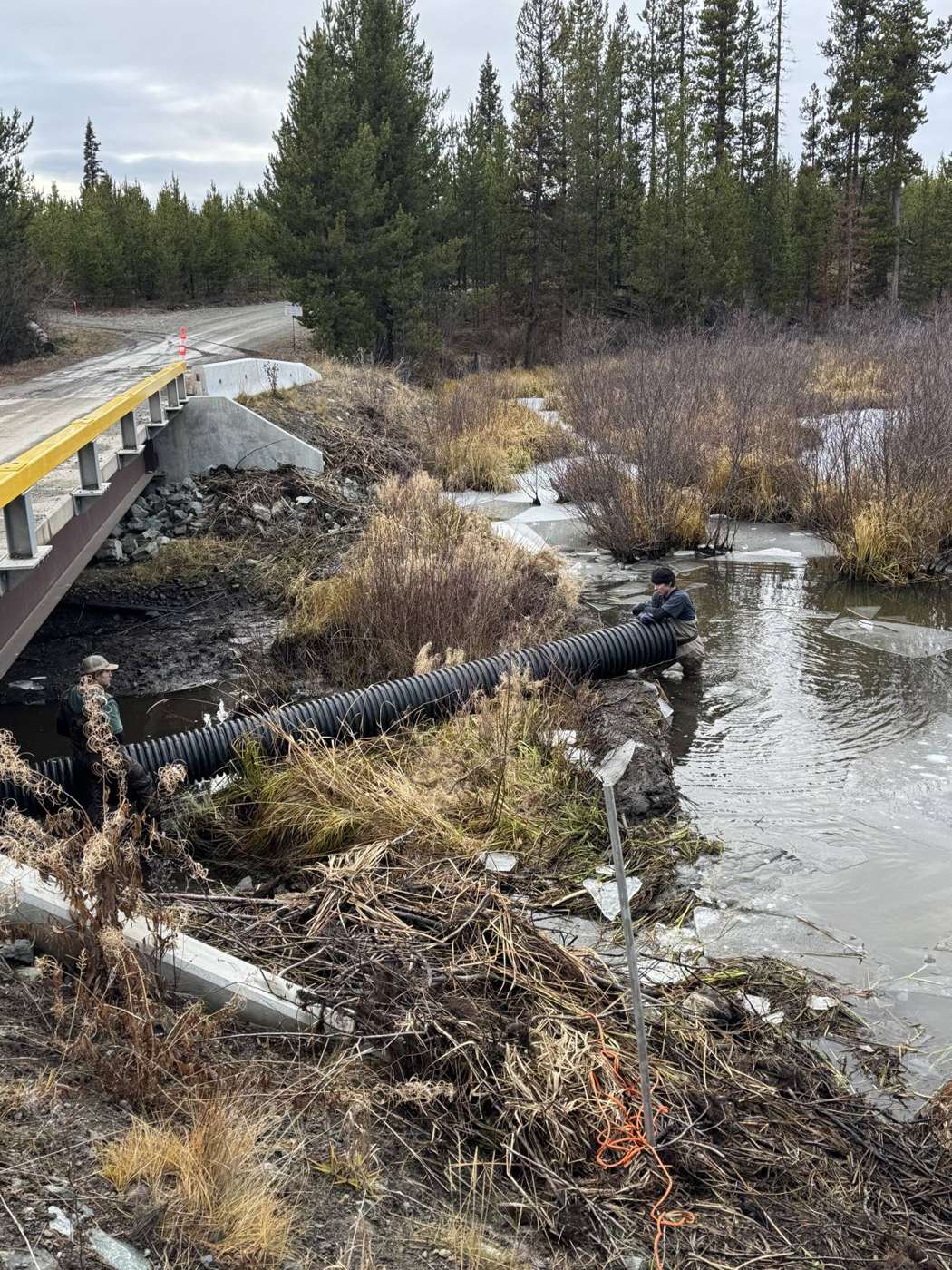
Getting it done before freeze-up
This is a remote, high-elevation site, and the installation window closes when the wetlands freeze. Our specialist team trailered in tracked equipment for the wetland work and finished the main systems in mid-November, hours ahead of freeze-up.

The result
The three dams now hold their water through the season under our control, and the beavers stay in place doing the storage work. The partners have a mechanism to release cold groundwater into the Nicola system when downstream conditions call for it, instead of fighting the dams every year.
Our spring return is built into the program: a full site survey, a beaver population estimate, a check for new dam activity, and fitting the final outlet couplers. The installation also showed us where to take the design next. Remote monitoring and control will let the devices be operated from off site and timed to downstream conditions, and we are adapting the outlet design to make that possible.
What this means for other Interior sites
The same tools work wherever beaver dams sit on water that people depend on: irrigation and storage reservoirs, ranch and farm drainage, road and rail culverts, and creeks managed for fish. If a beaver dam is costing you water, flooding or time in the BC Interior, see beaver control in the BC Interior, or read how pond levelers and flow control devices work.