
When beavers plug a culvert, water backs up behind the road and can wash it out. Who handles the fix depends on who owns the crossing, and a highway, private land and a forest service road can each fall to a different party. Either way, the lasting solution keeps water moving through the dam instead of clearing sticks. At culverts, we pair an exclusion fence with a pond leveler, sized to each crossing.
Who is responsible when a beaver plugs a culvert?
Responsibility follows ownership, so start by confirming who owns the road and the culvert. A crossing on a public highway, a private driveway and a forest service road can each have a different authority responsible for it. Once the owner is known, the work can be planned around the water level, the size of the crossing and the beaver activity upstream.
Our beaver culvert protection work covers that technical side: combo devices that put a pond leveler through an exclusion fence, and our own levelers fitted directly to culverts.
Our operating base is just south of Revelstoke, and beyond that we deploy specialists to where they are needed. Our Interior BC beaver control page covers the region in more detail.
Why do beavers plug culverts?
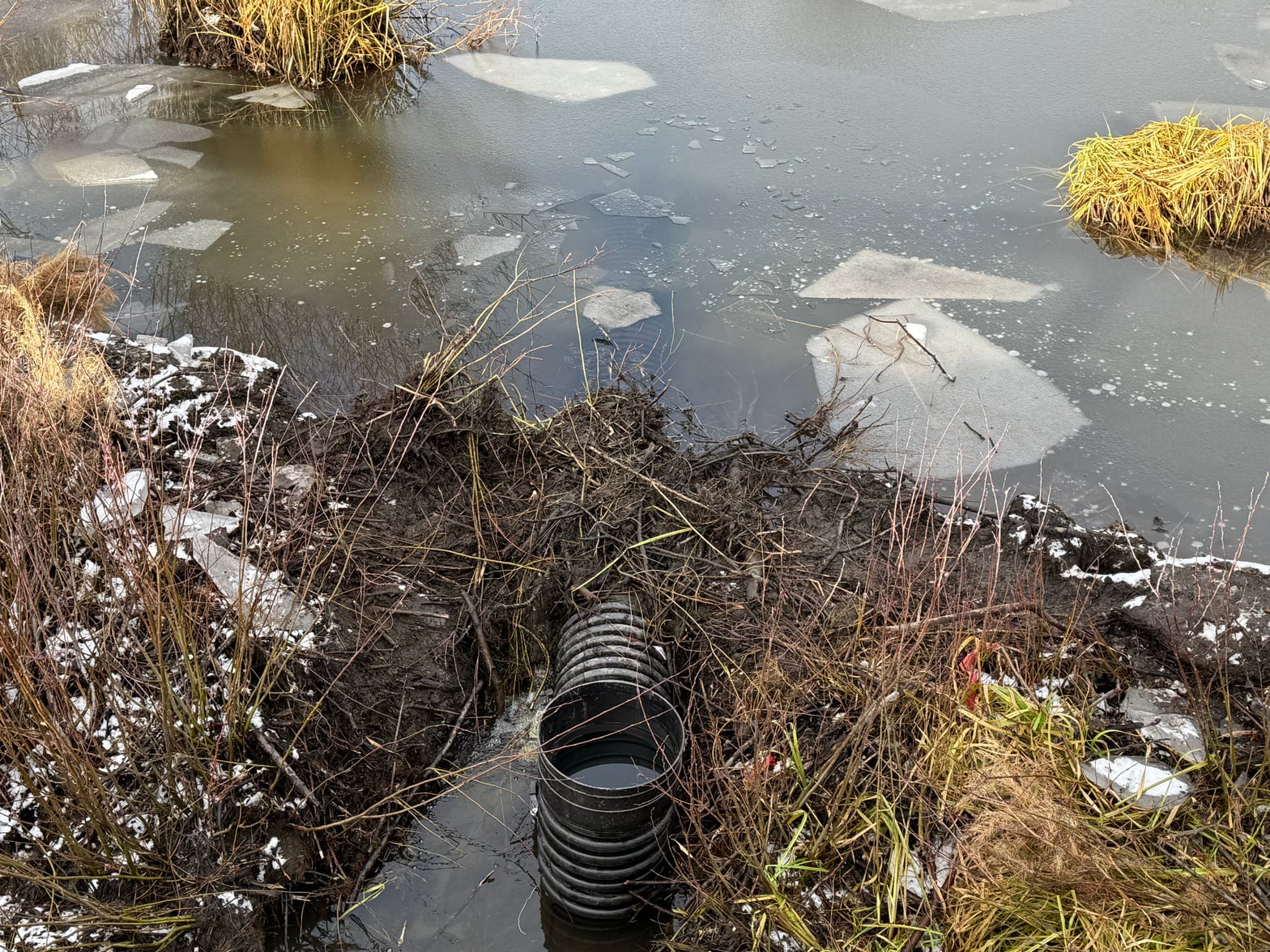
To a beaver, a culvert is a gap that needs closing. Sticks, mud and vegetation get pushed into the inlet, and the blockage builds from there. A 2005 report on keeping beavers from plugging culverts puts the consequence plainly: when culverts are plugged, roads can be washed away by flooding (Beavers and culvert plugging). Beaver damage more broadly takes three forms: gnawing on trees or crops, flooding through dam building, and burrowing that destabilizes banks and levees (Beavers, University of Nebraska-Lincoln).
How do you tell if a beaver dam is active?
An active dam is one the beavers are still maintaining, and the way we check is with a small test notch. We cut it about as wide as a boot and about 2 inches deep, just enough for the water to make noise running through the gap. If the notch is repaired overnight, the beavers are still working the dam.
That is our method for checking activity. Keep in mind that breaching, removing or otherwise altering a dam can need provincial authorization; our beaver dam removal rules page explains where that applies.
What are beaver deceivers, and where do they fall short?
A beaver deceiver is a stock device placed at a culvert to keep water flowing and discourage beavers from plugging the inlet. We do not install them. Stock designs have known limits: they are often undersized for spring runoff, beavers and debris can block them easily, and they need regular clearing. Sizing and maintenance decide whether a culvert device holds up, which is why we design ours to each crossing.
Why pair a fence with a pond leveler?
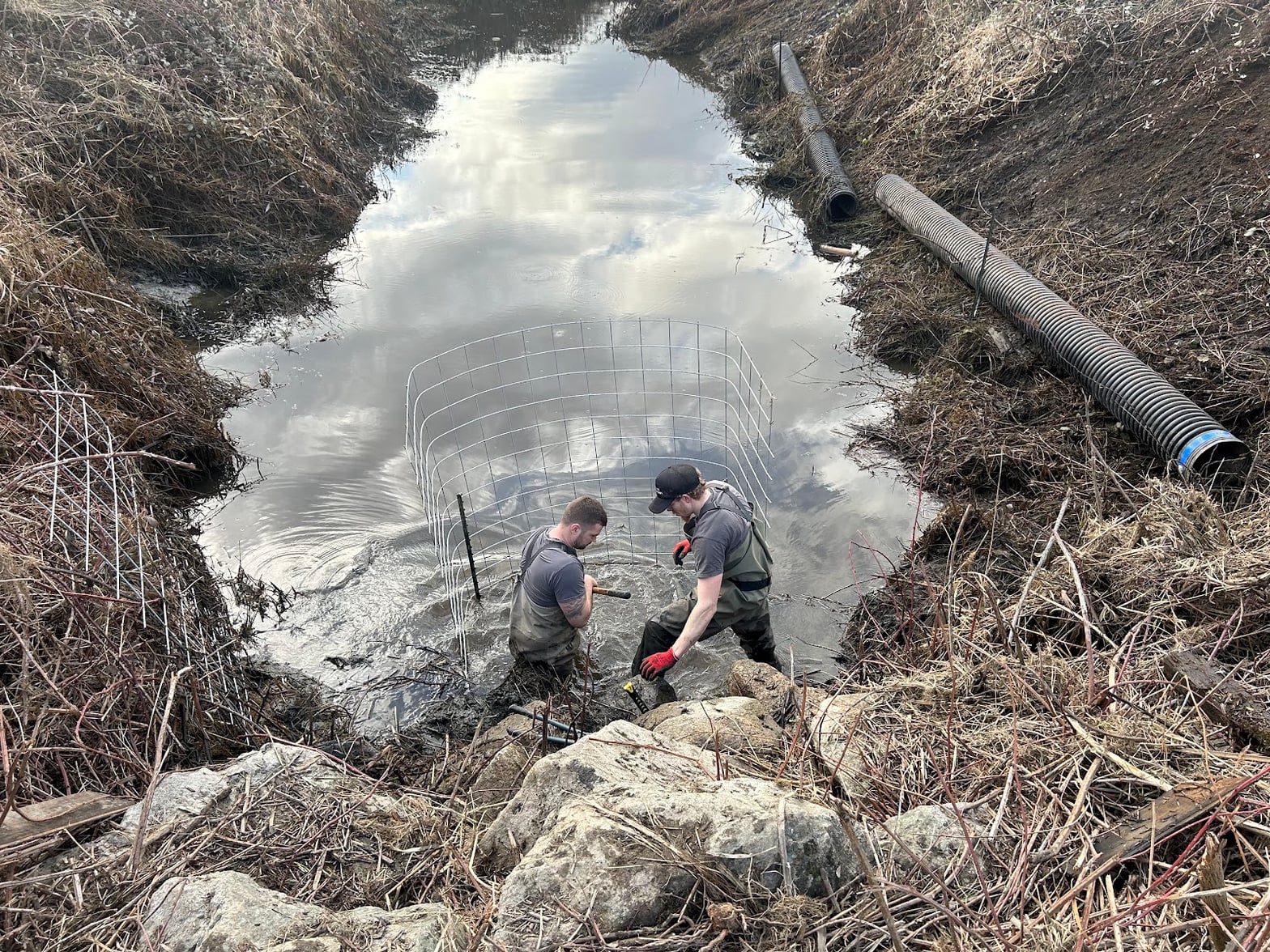
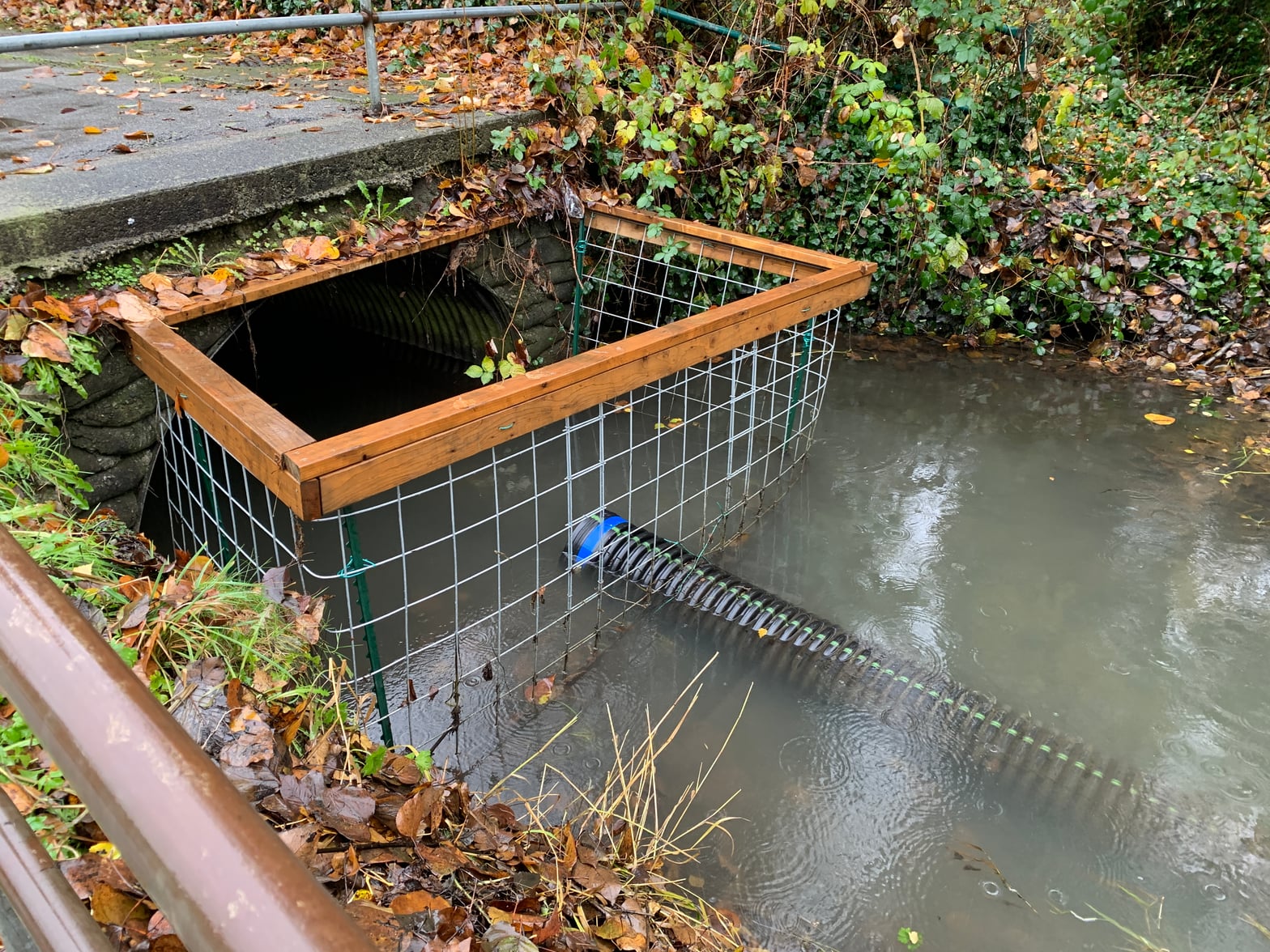
Each part solves half the problem. A fence keeps beavers off the inlet but does nothing about the water held behind the dam. A leveler holds that water at a set level but may not stop plugging at the culvert itself. Our combo device runs a pond leveler through an exclusion fence, sized to each crossing, so both jobs are covered.
| Option | What it does | Main limit |
|---|---|---|
| Stock beaver deceiver | Moves water past the dam at the inlet | Often undersized for spring runoff, blocked by beavers and debris, needs regular clearing |
| Exclusion fence alone | Keeps beavers away from the culvert inlet | Does not control the water level behind the dam |
| Pond leveler alone | Holds water behind the dam at a set level | May not protect the culvert from plugging |
| Our combo device | Fence and leveler together | Designed for each crossing rather than bought as a stock unit |
Where a culvert itself needs a leveler, we fit it with an installation method we developed, which is beaver-proof and guaranteed. On our Clapperton Creek project, we fitted pond levelers to three beaver dams in the Nicola watershed; the details are on our Clapperton Creek project page. For how these devices work and when they need maintenance, see our pond levelers and flow-control devices page.
Can you alter a beaver dam without authorization?
Check before you touch it. Breaching, removing or otherwise altering a dam can need provincial authorization. Our beaver dam removal rules page sets out the rules and permits for British Columbia.
Sources
- Government of British Columbia, Beaver Dam Management, drainage management guide factsheet no. 16: https://www2.gov.bc.ca/assets/gov/farming-natural-resources-and-industry/agriculture-and-seafood/agricultural-land-and-environment/water/drainage-management-guide/543110-1_beaver_dam_management-drainage_guide_factsheet_no16.pdf
- University of Nebraska-Lincoln, Beavers (2017)
- digitalcommons.unl.edu, How to keep beavers from plugging culverts (2005)
Common questions
Can a beaver dam be removed to stop culvert flooding?
A dam can be altered, but breaching or removing one can need provincial authorization, so check the rules before any work. Removal alone often does not settle the problem, because the beavers are still active and the culvert can plug again. A site assessment shows whether the crossing needs flow control instead.
Does fall change anything about beaver dams at culverts?
Fall is a practical time to walk culverts and look for new dam building before freeze-up. A dam caught early is easier to plan around than one that has grown through the season. Checking early also gives your crew time to schedule a proper device if one is needed.
Do you install beaver deceivers?
No. At culverts we use our own combo devices, which run a pond leveler through an exclusion fence sized to each crossing. Where a culvert needs a leveler, we fit it with our own installation method, which is beaver-proof and guaranteed.
Who should a municipality call first about a plugged culvert?
Start by confirming who owns and maintains the road and the culvert, since responsibility differs between highways, private roads and forest service roads. Once the owner is known, bring in a wildlife management specialist to assess the beaver activity and the crossing. Any work on the dam itself can need provincial authorization.