
To drain a beaver pond without harming fish, open the dam in small stages, widen it only as the pond drops, work from the most downstream dam up, and watch the water below the dam for sediment the whole time. The safest and fastest way to do that last part is real-time turbidity monitoring: sensors in the creek that report water clarity live, so the crew can release as much water as the creek can safely carry and slow down the moment it clouds up.
Why is draining a beaver pond risky for fish?
A beaver pond is a sediment trap. Years of fine silt, organic muck and leaf litter settle behind the dam. Open the dam all at once and that material goes downstream in a single slug, along with a surge of water.
That combination is what fisheries rules are written to prevent. The federal Code of Practice for beaver dam breaching and removal lists the risks it is managing, including sediment release, changes in flow and fish stranding, and requires crews to "manage sediment laden water flowing onto or through the site during all phases of the project" (Fisheries and Oceans Canada). Saskatchewan's guidance asks people to "prevent sediment at the bottom of the pond from being released downstream" (Water Security Agency).
There is a liability side too. In Saskatchewan's words, "individuals removing beaver dams are liable for any damages that occur downstream" (Water Security Agency).
What do the rules say about how fast to drain a pond?
They don't give a flow rate. They describe a method:
- Remove the dam "gradually, beginning with a small breach," and work in stages to control flows and prevent fish stranding (Fisheries and Oceans Canada).
- Keep the opening no wider than the original stream channel, and enlarge it as the pond drops (Fisheries and Oceans Canada).
- "Regularly observe the watercourse or water body for signs of suspended sediment during all phases of the project" (Fisheries and Oceans Canada).
- Work outside restricted in-water periods, and start at the downstream dam (Water Security Agency).
"Gradually" leaves the hard question open. Too cautious and a crew on a remote site burns days waiting. Too fast and the creek goes brown. The answer depends on what the water is actually doing, and that is something you can measure.
What is turbidity monitoring, and how does it help?
Turbidity is how cloudy the water is, caused by suspended particles such as silt and organic matter. It is the most direct sign that a dam release is moving sediment downstream.
The usual approach is to look at the water, or take a handheld reading now and then. That tells you what happened, after it happened. Real-time monitoring puts sensors in the creek below the work and streams readings to the crew continuously.
Humane Solutions built its own remote in-stream turbidity monitoring system for this kind of job. Readings come straight to the crew's phones while they work on the dam. If turbidity starts to climb, they ease off the release. If it holds steady, they open the dam further. Certified handheld readings before and after each dam back up the live data for the client's records.
Does monitoring make the job slower or more expensive?
The opposite, in our experience. Without live data, the only safe choice is to drain slowly and hope. With it, the crew can run each release at the highest rate the creek will take without clouding up, so the water comes off sooner and the crew spends fewer days on site. On remote jobs, where travel, camp and equipment add up every day, that saving is real.
A real example from far northern Saskatchewan
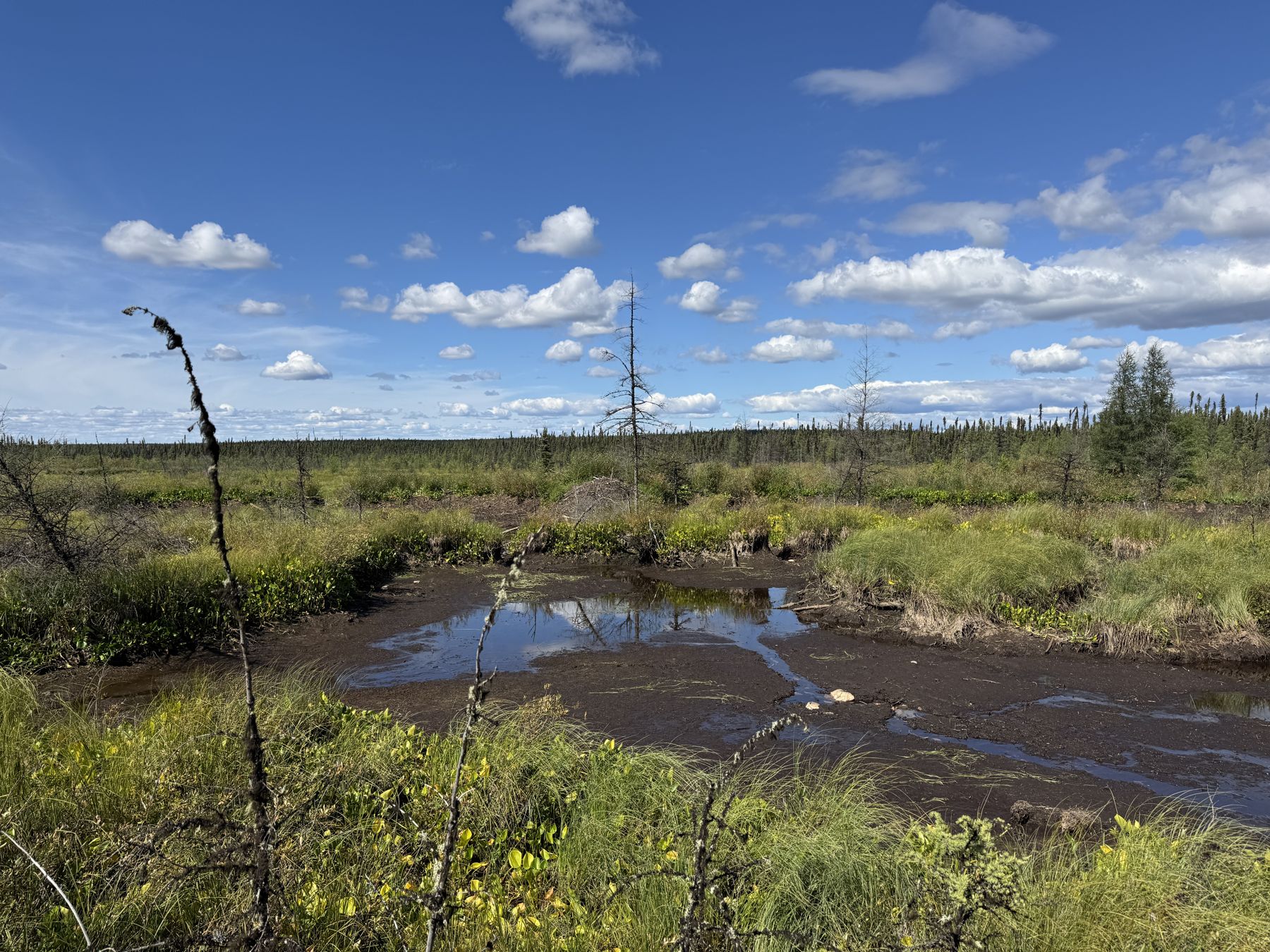
At a remote mine site in far northern Saskatchewan, we removed more than 20 beaver dams from a creek running through muskeg, upstream of fish habitat. The muskeg above each dam held far more water than the ponds suggested, and the old channel was narrow and nearly flat, so how fast the water could safely come off was the deciding factor in the schedule.
Remote turbidity sensors in the creek fed live readings to our phones all day. We opened each dam as far as the readings allowed, and the slow release and the filtering effect of the muskeg meant we recorded no meaningful increase in turbidity at any point. Every dam came out inside the deadline, and the creek runs as a single channel again. Read the full project story.
When should you bring in a specialist?
A single small dam on private land is often something an owner can manage within the rules. Bring in a specialist when:
- the dams are on or upstream of fish-bearing water, or near a regulated site such as a mine, pipeline or utility
- there is more than one dam, or you can't see how many there are
- the ground can't take machinery
- there is a deadline, a permit condition or a regulator watching downstream water quality
We work across British Columbia, Alberta, Saskatchewan and Yukon. See beaver management in Saskatchewan, how we remove dams where machines can't reach, or contact us about your site.
Sources
- Code of practice: Beaver dam breaching and removal, Fisheries and Oceans Canada
- Beaver dam removal, Water Security Agency (Saskatchewan)