
A creek the mine needed dry, at the end of the road
The site sits in the Athabasca Basin, about as far north as you can drive in Saskatchewan. The last few hundred kilometres are gravel, and the site is a long day's drive past the last town.
A creek running through muskeg on the property had been dammed into a staircase of ponds. The operator had mapped 19 dams and four lodges along about a kilometre of it, and the water they held was sitting on ground set aside for expansion. They needed it drained, the dams gone, and the creek back to a single channel, inside a fixed window that kept the work clear of fish spawning.
Two things made it hard. Heavy equipment could not get anywhere near the creek: before we arrived, the operator couldn't get a single machine into the area without it getting buried in the muskeg. And the creek drains to fish habitat downstream, so dumping a season of stored water and sediment in one go was not an option.
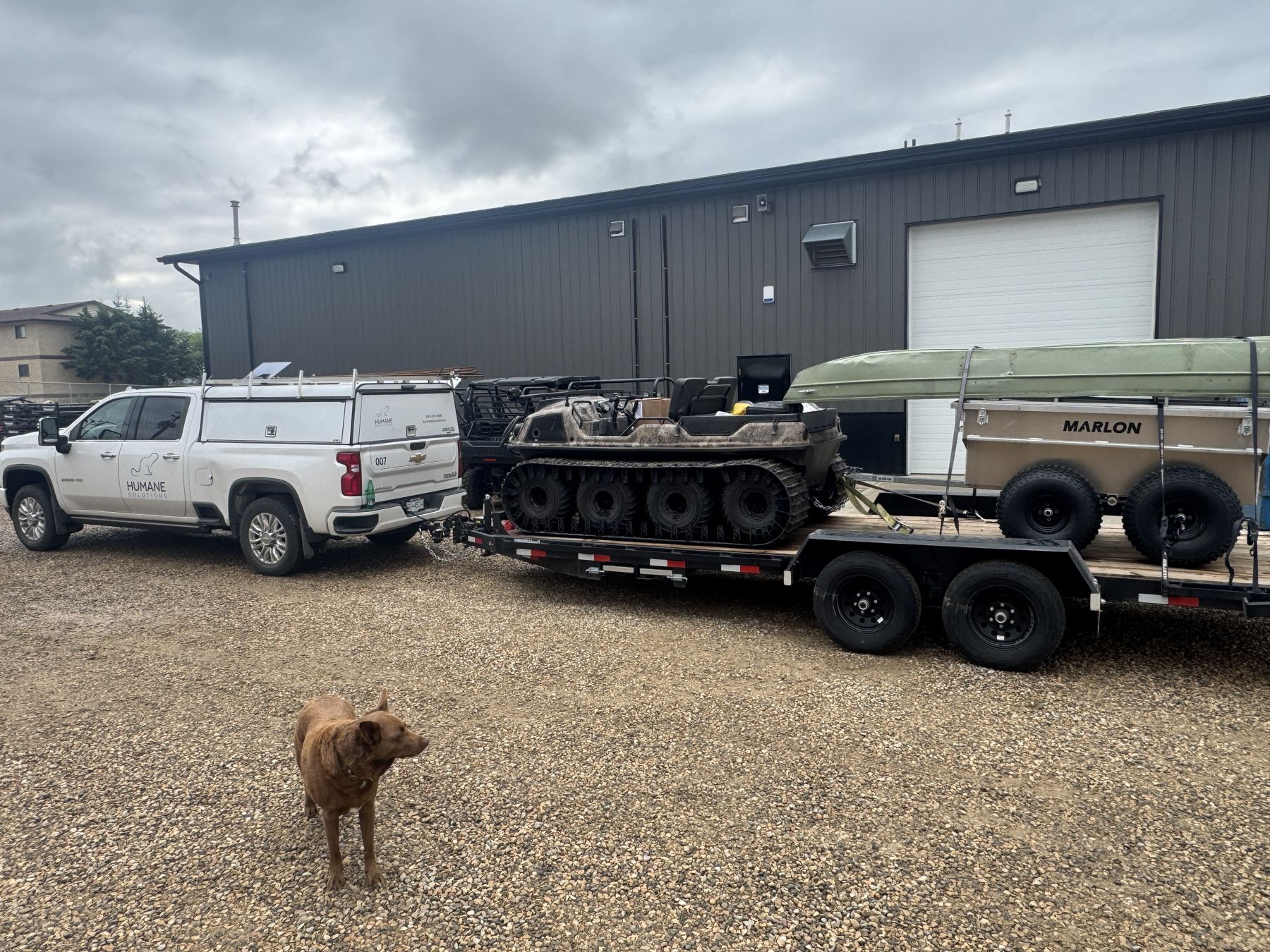
Why the job came to a specialist team from Vancouver
The operator needed one thing above all: a finished creek by the deadline. Their own survey left real uncertainty about how many beavers were still active and how many dams were hidden under the ponds. Most contractors will only quote a job like that by the day, which leaves the client carrying the risk if the count goes up.
We took it on a fixed scope with a hard completion date, whatever number of dams or beavers we found. That is the kind of work Humane Solutions exists for: remote, high-liability jobs where the client needs a guaranteed professional result rather than a best effort.
Getting there was part of the job. Our crew, a tracked amphibious Argo, trailers and all the gear made the trip from Vancouver to the end of the northern Saskatchewan road network, eight days of travel all told.
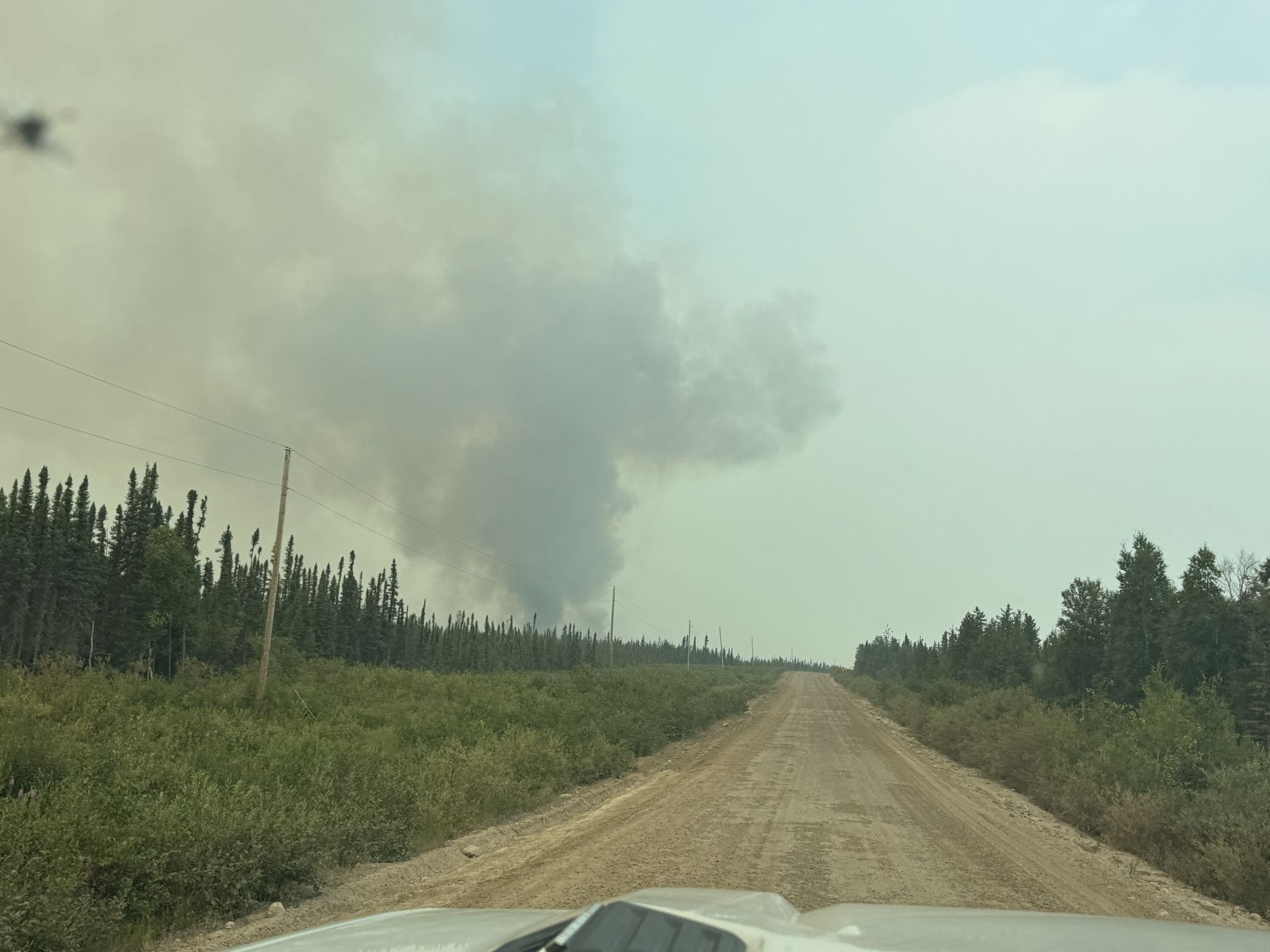
Pulling dams by hand and winch where machines can't go
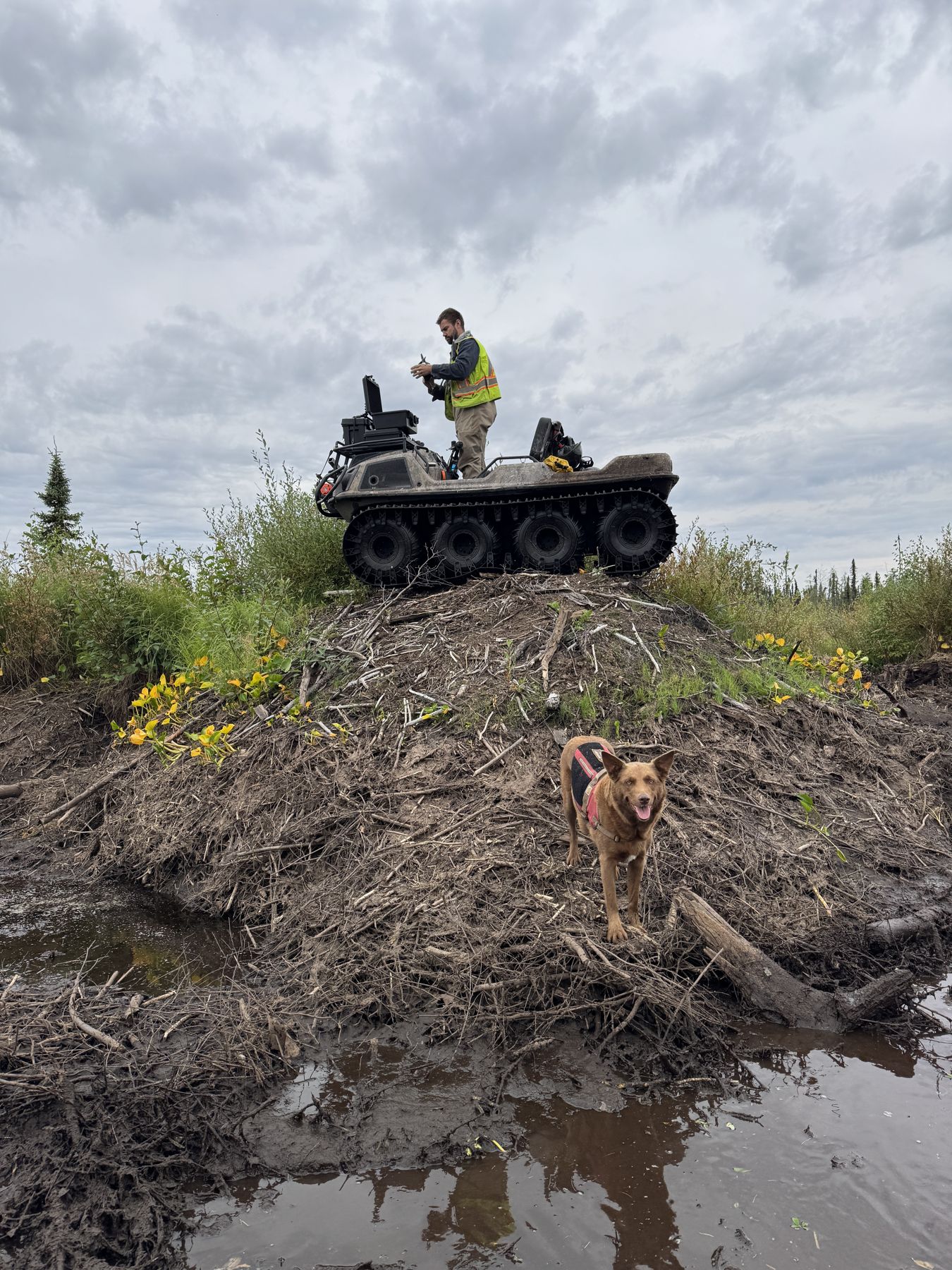
The drone went up first, to map every pond, dam and lodge before anyone stepped into the creek. Trail cameras went out along the whole drainage and stayed out for the whole job.
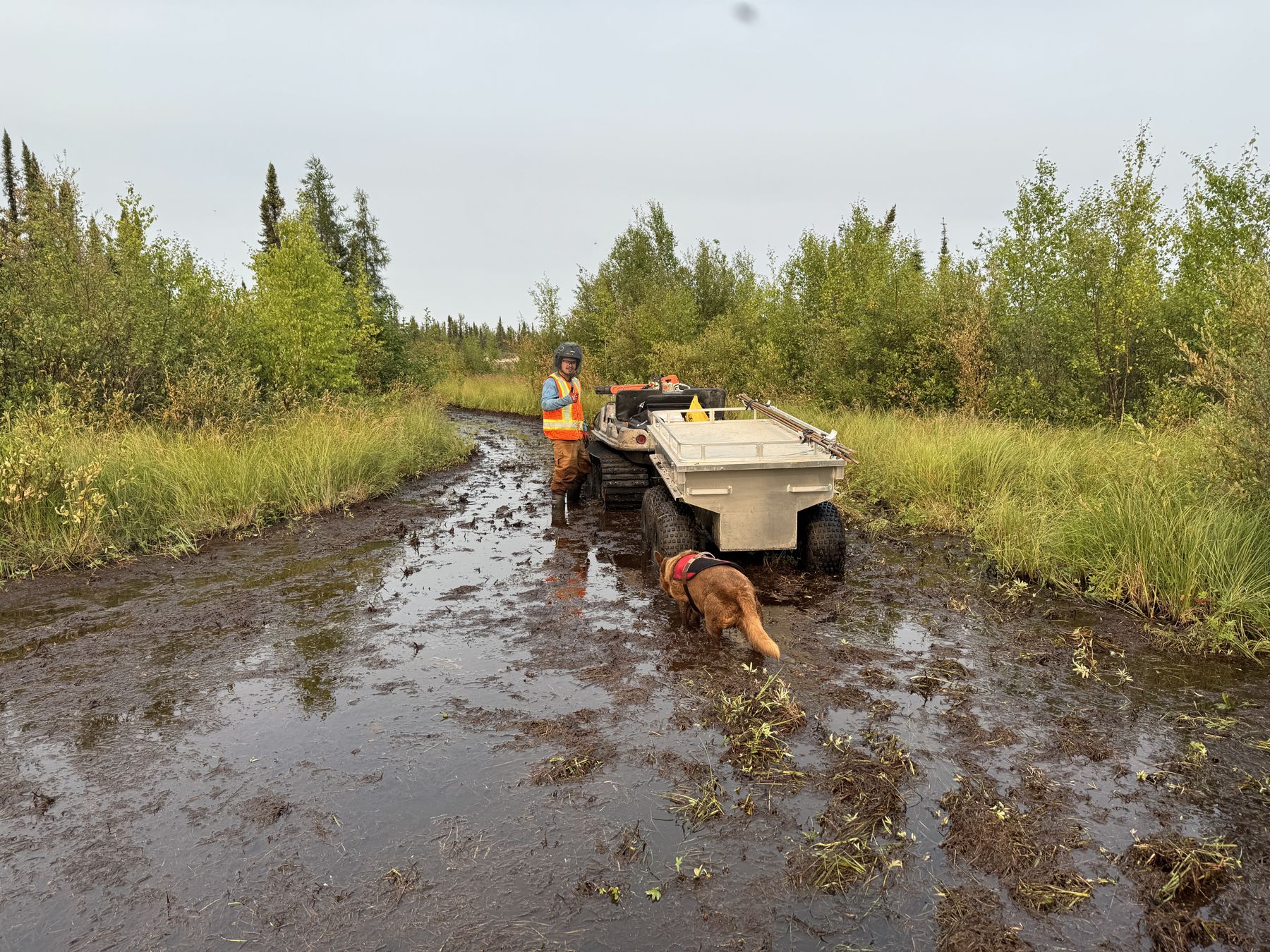
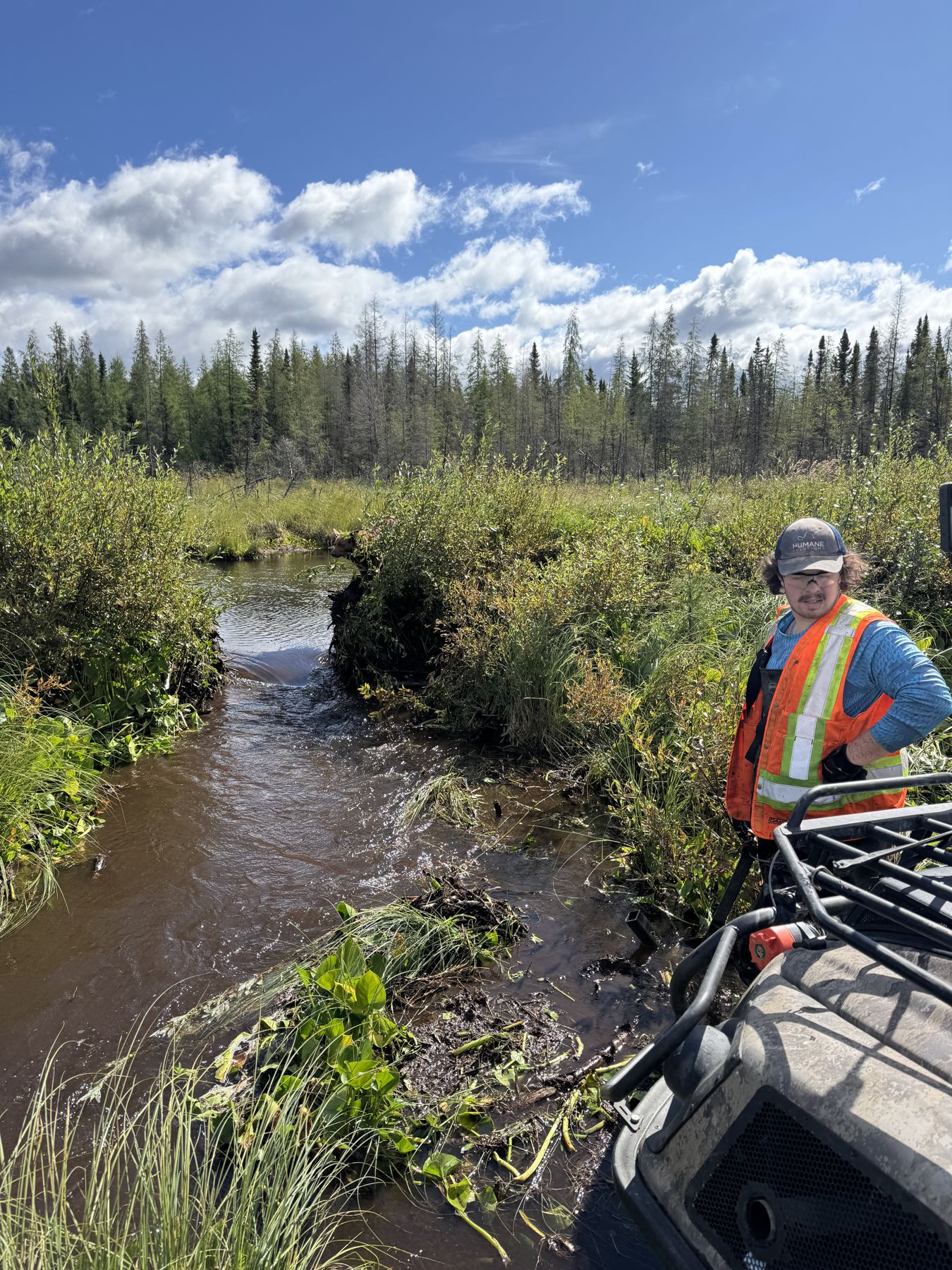
From there, everything was done on foot, from the Argo, and with winch systems. The Argo carried the crew and gear across the muskeg, and winch lines let a small crew pull apart dams that would otherwise need an excavator. Every dam was opened to the original streambed in line with Saskatchewan Water Security Agency guidance and the federal Code of Practice for beaver dam breaching and removal. Our wildlife detection dog worked the banks with us and was very good at finding the dams the rest of us walked past.
The operator's map turned out to be the minimum. Each time the water dropped, it uncovered dams that had been sitting underwater further down the creek. The crew walked the full drainage every day and pulled each new one as it appeared, well past the 19 on the original list.
Draining fast without muddying the creek
The muskeg above each dam held far more water than the ponds suggested, and the old channel was narrow and nearly flat. Release it too slowly and the job runs weeks over. Release it too fast and sediment goes downstream into fish habitat.
We solved that with our own remote turbidity monitoring system. Sensors in the creek sent live readings to the crew's phones all day, alongside certified handheld readings before and after each dam came out. Because we could see the water quality in real time, we could open each dam as far as the creek would safely take, rather than guessing low and spending extra days on site. That kept discharge as high as possible and the cost down, while turbidity stayed inside safe limits for fish.
In the end the wetland did some of the work for us. The slow release and the filtering effect of the muskeg meant we recorded no meaningful increase in turbidity at any point.
The result
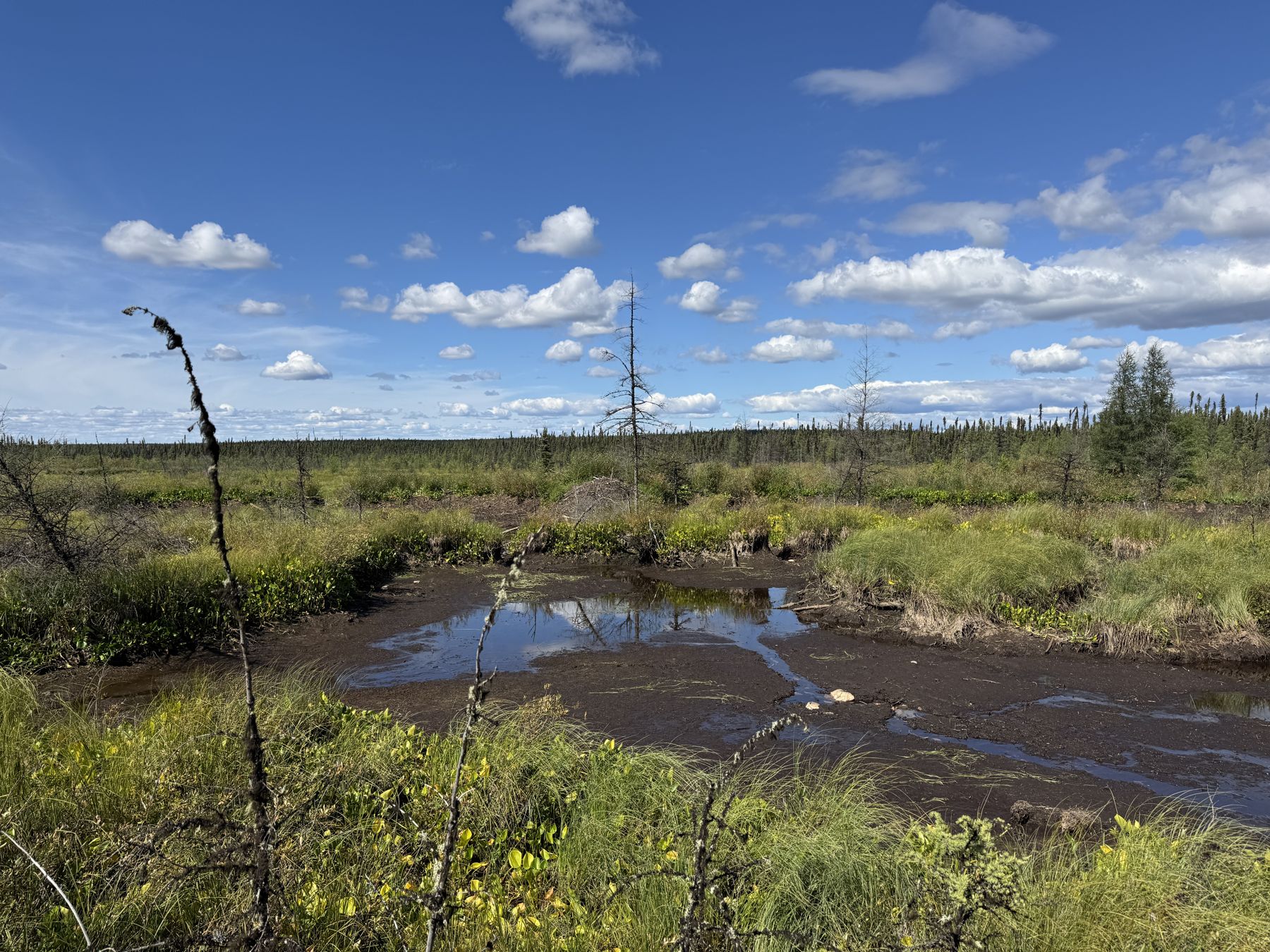
Every dam on the creek is gone, the original ones and every hidden one we found, and the creek runs as a single channel again. The ground the operator needed came out from under water from the first few days and kept draining for weeks after we left. We finished by the date we guaranteed, under budget, and the operator's critical expansion project went ahead.
Before leaving we flew the drone and scouted the surrounding lakes and creeks for lodges that could send new beavers back into the creek. We found none close enough to make recolonization likely soon. The operator has a simple spring and late-summer check of the main dam sites, and we review their drone footage at no charge.
What this means for other remote and industrial sites
Mine sites, pipelines, rail and road corridors and remote utilities across western Canada run into the same problem: beaver dams on ground that machines can't reach, next to water that regulators watch closely, with a date that can't move. We deploy specialist crews across British Columbia, Alberta, Saskatchewan and Yukon for exactly this work. See beaver management in Saskatchewan, read about beaver dam flooding, or talk to us about your site.