
A variable pond leveler is a flow-control device with an adjustable outlet. It lets you hold, raise or lower the water behind a beaver dam at a height you choose. A standard leveler sets that height once, and water above it keeps leaving. A variable outlet suits sites where storage, downstream flow or seasonal levels matter. It still needs monitoring, because beavers can plug the intake.
For how we approach these devices more broadly, see our page on pond levelers and flow-control devices.
What makes a variable pond leveler different?
The outlet is the difference. A variable design has an adjustable riser at the outflow end, so the operator sets the water height instead of accepting whatever height the pipe allows. The Clemson Beaver Pond Leveler has two main parts: a perforated intake above the dam and a solid outflow pipe below it. That outflow pipe may end in a movable elbow fitting that serves as a riser to regulate the height of water behind the dam (Virginia Cooperative Extension, Managing Wildlife Damage: Beavers).
| Feature | Standard leveler | Variable outlet |
|---|---|---|
| Water height | Fixed by the outlet pipe | Set and changed with the riser |
| Water in storage | Drains down to the outlet level | Can be held higher when needed |
| High flow | Passes flow at one height | Riser can be adjusted to release |
| Best fit | Simple, steady level control | Sites with storage or seasonal goals |
Why does a standard leveler drain the pond?
A fixed outlet sets one water level, and anything above it leaves whether you want it released or not. That works where the only goal is keeping a dam from flooding a road or field. It does little for a pond you want to keep full through a dry stretch or hold for another use.
The Alabama extension service puts the advantage plainly: a pond-leveling device lets the manager, rather than the beavers, control the water level. It also notes that being able to raise or lower the level helps when a landowner wants to manage a pond for waterfowl or simply keep levels up while beavers are present (Alabama Cooperative Extension System, Beaver Damage Control and Trapping in Alabama (2025)).
How do beavers respond to a leveler?
Beavers react to water they can detect escaping, so the design has to hide the draw point. Intake pipes should extend a considerable distance upstream of the beaver structure, typically a minimum of 20 feet, which reduces the chance that beavers find where water is leaving and plug the intake (Virginia Cooperative Extension, Managing Wildlife Damage: Beavers).
Where beavers are abundant, they may try to stop up these drains and reduce flow, so the devices must be monitored and cleaned regularly (Alabama Cooperative Extension System, Beaver Damage Control and Trapping in Alabama (2025)).
In our own work, we fitted pond levelers in three beaver dams on Clapperton Creek in the Nicola watershed, as part of a project focused on beaver-enhanced groundwater (Humane Solutions, Clapperton Creek project).
When does a variable outlet make sense?
A variable outlet fits where the pond has a job beyond staying out of the way. Situations where that adjustability helps include:
- Holding water through dry periods for wildlife or stock
- Keeping a steady level along wetland edges
- Releasing water ahead of high flows or heavy rain
- Maintaining a pond on a set schedule for a farm, conservation area or industrial site
The risk on the other side is well documented. Pond expansion can lead to nuisance flooding and tree mortality, raising concerns from landowners, infrastructure managers and water users (Communications Earth & Environment, Factors influencing surface water accumulation in beaver pond complexes across the Western United States (2025)). If a pond is already causing that kind of trouble, our page on beaver control across the BC Interior covers our work in the region.
How do you check whether a beaver dam is active?
We use a small test notch, about as wide as a boot and about 2 inches deep, just deep enough for the water to make noise as it runs through. Then check for overnight repair. If the notch has been rebuilt by morning, the dam is active.
This is our method for checking activity, and it tells you only what the dam is doing. Breaching, removing or otherwise altering a dam can need provincial authorization, so read the rules and permits for beaver dams in BC before you touch any structure.
What makes a variable leveler fail?
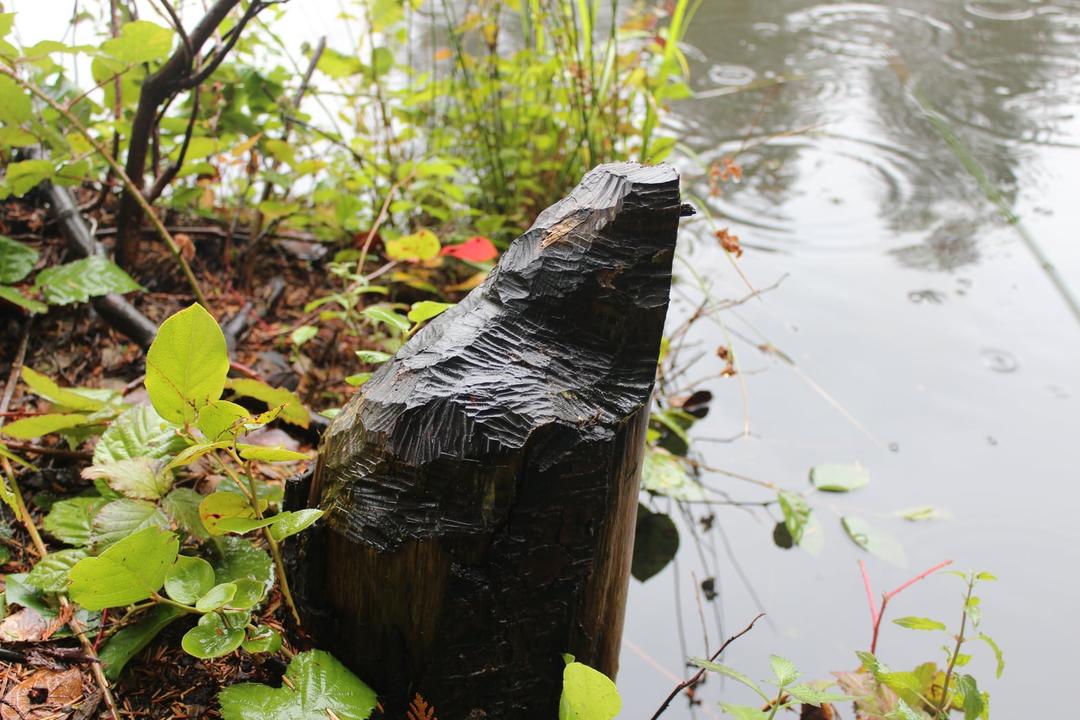
A blocked intake or riser is one way these devices can fail. Beavers and debris can both stop up these parts, so they need regular clearing. Fresh chisel marks on a stump like the one below show that beavers are feeding at the site.
Sources
- Virginia Cooperative Extension, Managing Wildlife Damage: Beavers (Castor canadensis): https://pubs.ext.vt.edu/420/420-202/420-202.html
- Alabama Cooperative Extension System, Beaver Damage Control and Trapping in Alabama (2025): https://www.aces.edu/blog/topics/forestry-wildlife/beaver-damage-control-and-trapping-in-alabama/
- Communications Earth & Environment, Factors influencing surface water accumulation in beaver pond complexes across the Western United States (2025): https://www.nature.com/articles/s43247-025-02573-x
Common questions
Can a pond leveler be set into an existing beaver dam?
Yes, these devices are placed through the dam to manage the water level. The Clemson design has to be permanently incorporated into the dam structure to work properly, so the fit depends on the dam itself.
Does a pond leveler stop beavers from rebuilding the dam?
No. A leveler controls the water height behind the dam, so the dam can stay in place while the water is managed. Beavers may keep working the site, which is why the intake and outlet need regular checks.
Why is the intake placed so far upstream?
A long intake makes it harder for beavers to find where water is escaping and plug it. The intake typically extends a minimum of 20 feet upstream of the beaver structure.
How often should a pond leveler be inspected?
It depends on how active beavers are on the site and how much debris comes down the water. Where beavers are abundant, the device needs to be monitored and cleaned regularly.