
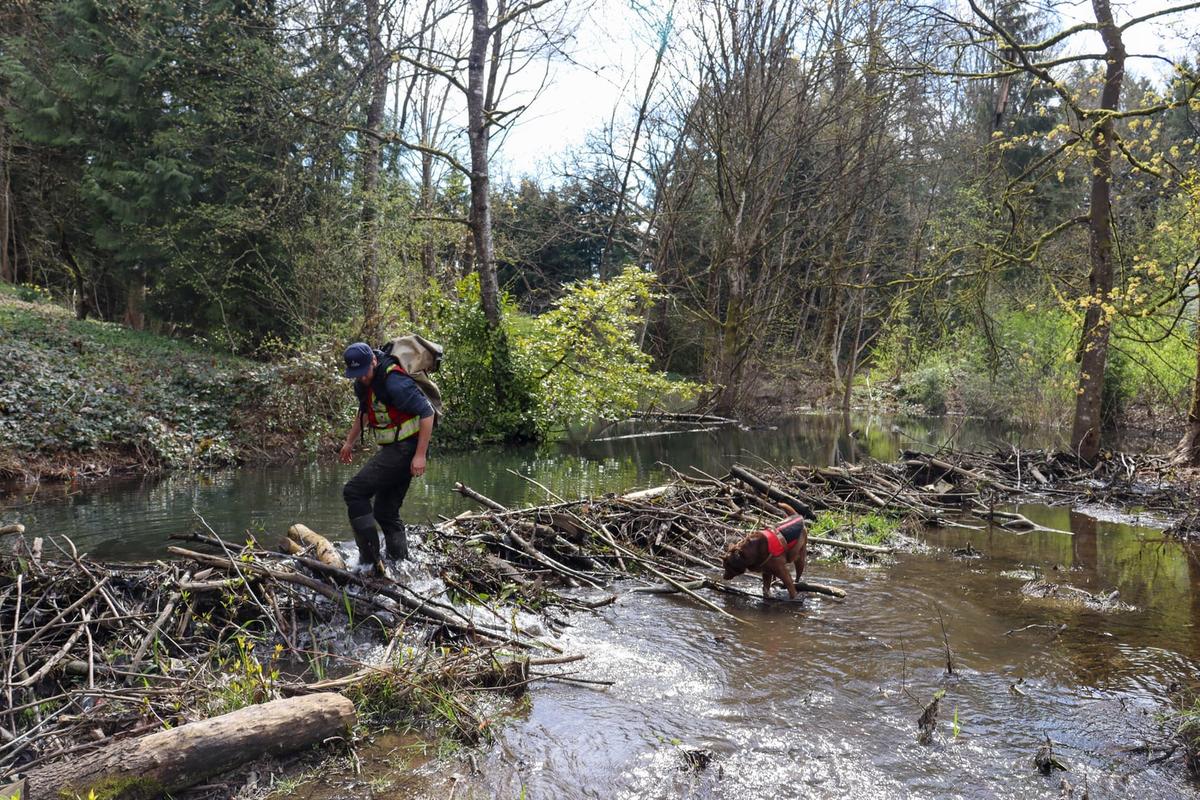
Remove a beaver dam only after you have confirmed it is active, worked out whether the flooding can be managed by controlling water levels, and checked whether provincial authorization applies. Often the flooding can be managed without removing the dam at all. When removal is the right call, the usual window is low water between the spring freshet and freeze-up, planned around fish timing and permit lead times.
We work from an operating base just south of Revelstoke and deploy specialists where the work is needed. For how that works in practice, see our beaver control across the BC Interior page.
How do you tell whether a beaver dam is active?
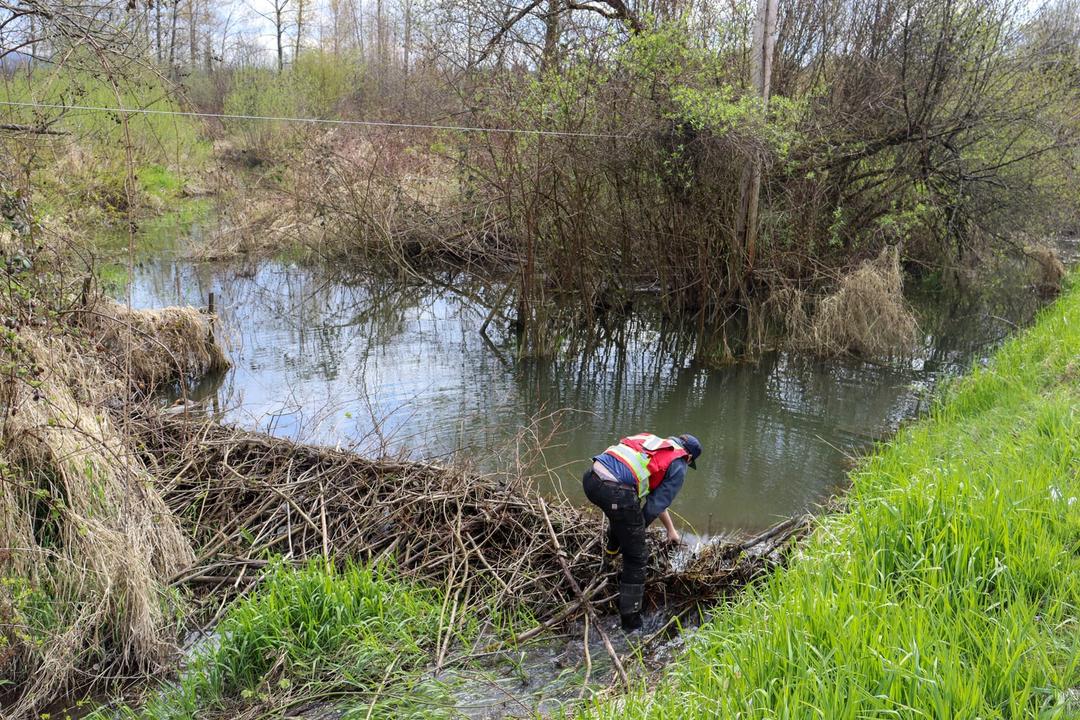
An active dam is one the colony is still maintaining. Removing an abandoned one carries less risk of a quick rebuild. Our method for checking activity is a small test notch, about as wide as a boot and about 2 inches deep, just deep enough for the water to make noise through it. If the notch is repaired overnight, the dam is being maintained. If it stays open, the colony may have moved on.
The notch confirms what other signs suggest. Before you test, look for:
- Fresh mud packed on the upstream face of the dam
- Newly peeled sticks with pale wood showing
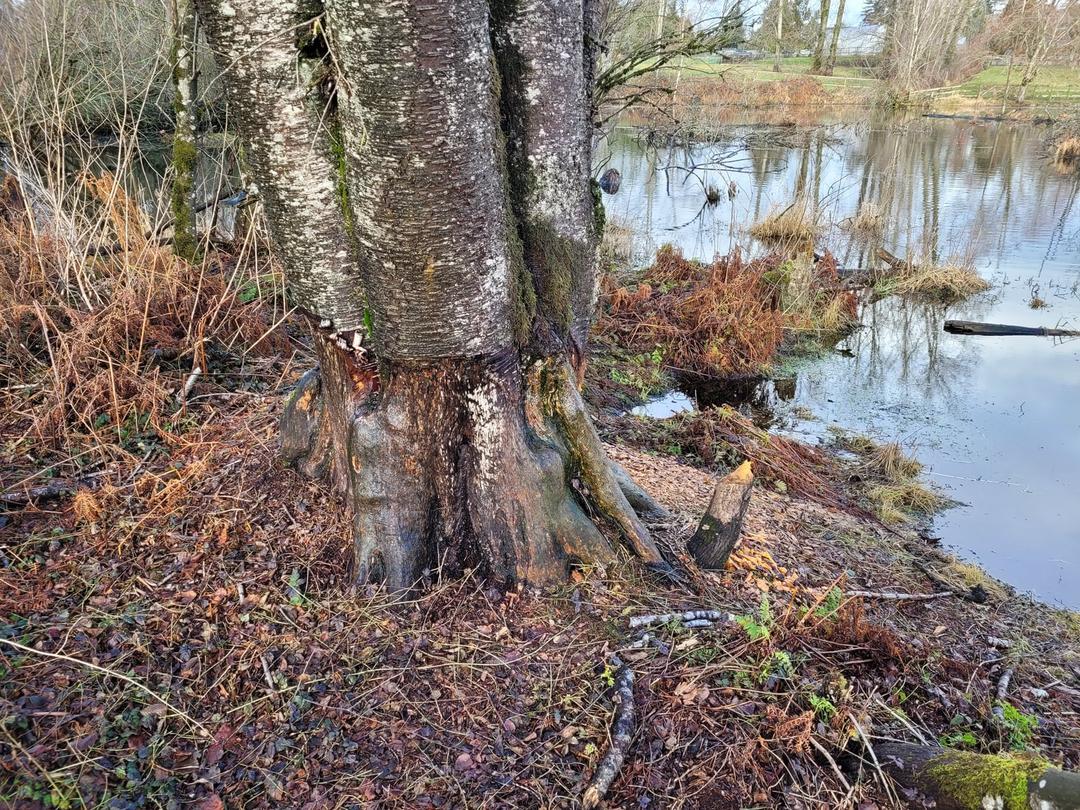
- Recent cuttings and wood chips on the banks
- A food cache of branches near the lodge in fall
- Water level holding steady even as inflow drops
Breaching, removing or otherwise altering a dam can require provincial authorization. Check the rules and permits for beaver dams in BC before you alter the structure.
How does timing change the answer in the Interior?
In the Interior, timing is set by snowmelt, water temperature and fish. Elevation shifts all of it, so treat the table below as a rough guide and confirm local conditions before you plan.
| Season | What is happening | What it means for removal |
|---|---|---|
| Ice-out | Water is high and cold, and the dam is saturated and carrying load | Assess the flooding and plan. Leave the structure alone. |
| Spring freshet | Snowmelt drives the highest and fastest flows of the year | Poor window. Removing a dam can send a sudden surge downstream. |
| Summer low water | Flows drop and banks are exposed | The most practical window for planned work, subject to fish timing and authorization. |
| Fall dam building | Beavers add material and stockpile food, often raising the dam | Removal is quickly undone. Water-level control usually holds better. |
| Freeze-up | Ice forms, the colony stays active under it, and conditions are hazardous | Defer the work to the next low-water period. |
In-water work windows exist to protect fish, including salmon, and they can restrict when you may disturb a stream bed. The calendar that looks open on paper is often narrower on the water. Permit lead times add another layer: an application started in late summer may not be authorized in time for that season's window, so begin the paperwork well before the window you want. Trapping seasons are also set in provincial regulation and change over time, so confirm them before planning any work that involves the colony itself.
Why do removed dams get rebuilt?
Beavers rebuild what they lose, and they can do it quickly. The pond is what the colony is defending, because it protects the lodge and keeps the food supply within reach. Pulling a dam leaves the colony on the same stream with the same reasons to build, and a dam removed in high water can be back within a short time. Without a plan for where the water needs to go, removal resets the problem rather than solving it.
When does removal make sense, and when does water control?
Removal makes sense when the dam threatens a structure that water-level control cannot protect, the colony is inactive or absent, and the work is authorized and timed to low water. Water-level control makes more sense when the colony is established, the flooding sits at a crossing or field edge, or the dam holds back water that still needs to move downstream.
A pond leveler is a pipe run through the dam that holds the pond at a set level. Beavers can't easily locate the leak because the intake sits well upstream and underwater, so they leave the dam standing and the water stays where it is set. Our pond levelers and flow-control devices page explains how they work.
A working example of water-level control
On Clapperton Creek in the Nicola watershed, we installed pond levelers in three beaver dams. Setups like this keep the dams standing while controlling the water behind them, which matters to municipal and conservation decision makers who want the ecological value of a colony without the flooding. Read the Clapperton Creek project for the details of the setup.
Common questions
Can I break a beaver dam myself to lower the water?
Not until you have checked the rules. Breaching, removing or otherwise altering a dam can require provincial authorization, and a partial cut can release water suddenly and cause damage downstream. Start with the rules and permits page for BC before you touch the structure.
Is fall a good time to remove a beaver dam?
Usually not. In fall, beavers are adding material and stockpiling food, so a removed dam is often rebuilt quickly. Water-level control tends to hold better through this season, and removal is better planned for low water.
How long does a removal permit take?
Lead times depend on the authority and the type of project, so there is no single timeline to rely on. Start planning well before the low-water window you are aiming for, and don't assume a spring application will be approved in time.
Do beavers come back after a dam is removed?
Often, yes, if the site still offers water, food and a suitable lodge location. Removing the dam alone does not change the conditions that drew the colony in. That is why we look at the flooding and how the water moves before deciding on removal.
What should I have ready before calling a specialist?
Have the location, the asset that is flooding, photos of the dam and the flooded area, and any notes on when the water rises. Tell us who owns or manages the land and which authority may be involved, since that shapes the permits and the timing. Clear information at the start makes for a more accurate plan.