
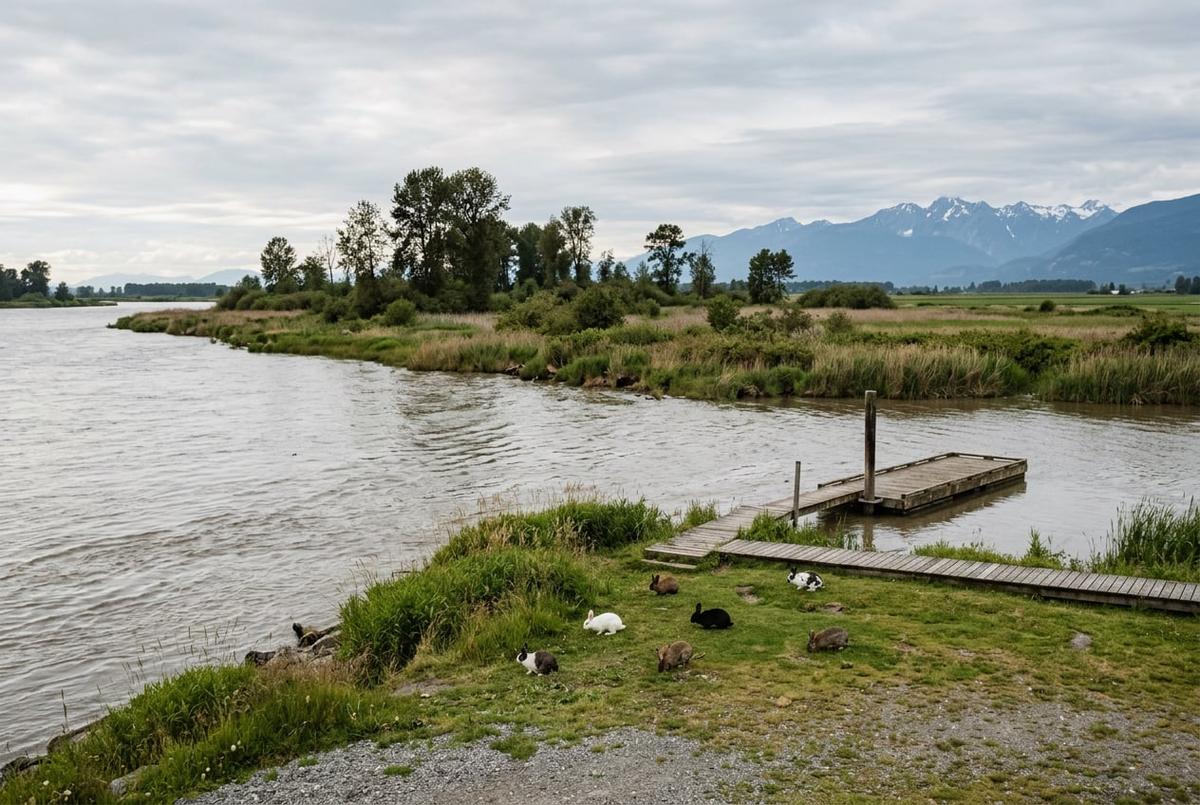
Richmond's feral rabbits started as pets that got loose or were dumped, and their numbers have been climbing ever since. Every time the City moves toward doing something about it, the response gets loud enough to stall it. This post is the first in what we call our open playbook: big problems in our field that most people won't touch in public, and the solution we would put forward.
Our proposal is simple to describe. Capture Richmond's feral rabbits across the whole city and move them to an island where they can live out their lives, and where the island, not the city, decides how many there are. Richmond happens to have one sitting just off its shore.
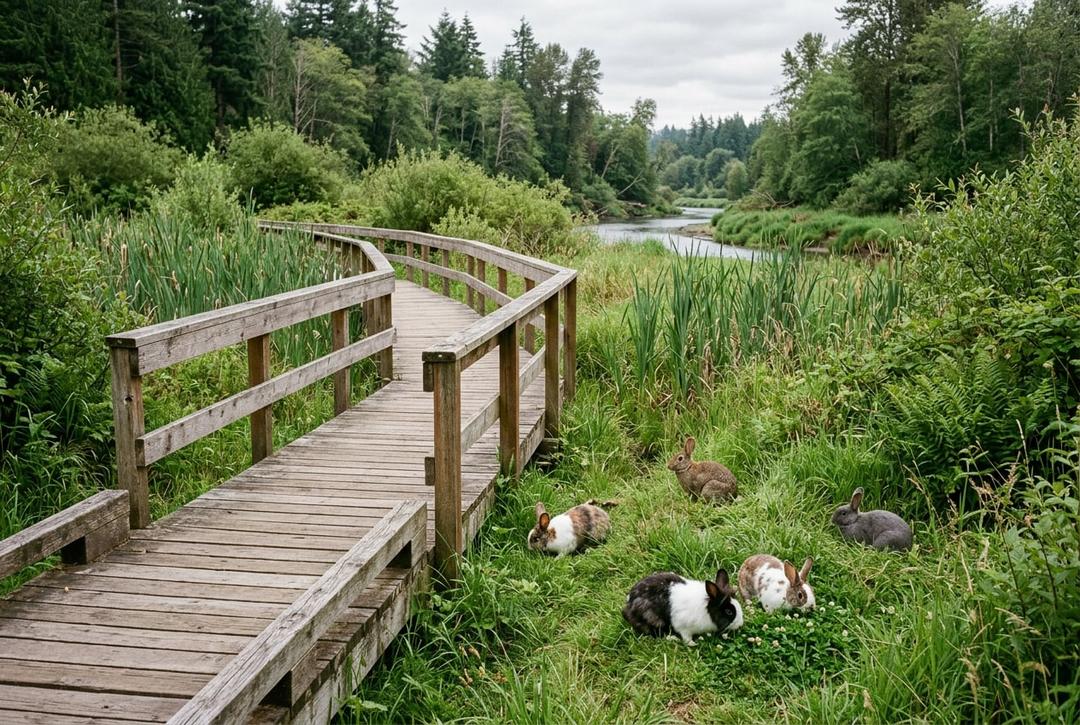
Why Richmond is stuck
The City is caught between two groups it can't ignore. Property owners, school grounds, community gardens and the people who maintain dikes and pathways all want something done. Every time a plan or a request for proposals comes up at City Hall, though, it draws a wave of opposition from animal advocates and residents who care about the rabbits. As one rescue leader told The Tyee, no elected official wants to be the one dubbed the "bunny killer".
Nobody knows the real number, and the City itself says so. For years the only public estimate was 1,000 to 2,000 rabbits, from a rescue group in 2019. By May 2026, the Vancouver Sun was reporting an estimated 3,000. A single female can have a litter of three to eight every 31 days, so even that figure is unlikely to hold for long. In the City's 2020 Dover pilot, all but one of the females caught were pregnant. Colonies have been reported in Minoru, Terra Nova, Aberdeen and Paulik parks, among other places. The Richmond Auto Mall carried as many as 400 rabbits for about a decade before a rescue group cleared it in 2017.
The City's own 2023 staff report sets out the damage. Burrows undermine pathways, slopes and the ground around foundations. Rabbits dig under school portables. At least 11 community gardens are affected, and gardeners have paid to fence their own plots. Rabbits are showing up around farmland, and some in Richmond have carried rabbit hemorrhagic disease, which threatens native rabbits. In 2022, observers counted rabbits at 24 sites: 39 in July and 72 in August, a month later.
The City has tried what it can without a fight. It banned rabbit sales in pet stores in 2010 and banned feeding and dumping animals in parks. It runs Easter awareness campaigns and has funded rescue pilots. A 2022 report still found the population wasn't going down. In 2023 Council approved a capture, sterilize and rehome plan, and in May 2026 the City asked contractors to quote on a pilot.
Doing nothing isn't a real option. A population that doubles quietly for a few more years leaves the City with fewer choices, and the choices that remain are the ones nobody wants. Acting early is the humane path, and it costs less.
Why the usual answers don't work
You can't just let them go somewhere else. European rabbits are invasive in BC. Since 2022, provincial rules have banned releasing them into the wild, and for good reason: moving them to a place without rabbits just starts the problem over there.
Trucking them out costs a lot and never ends. Sanctuaries on the mainland fill up. In early 2023, Richmond's main rescue group was caring for about 500 rabbits in enclosures, some of them on leased land slated for development. Every placement means transport, housing and care for years, and that capacity sets a hard limit on how fast any program can move. When the University of Victoria faced the same problem, a court injunction stopped a planned cull, and more than 900 rabbits had to be rehomed, some of them flown to a sanctuary in Texas.
Working one property at a time doesn't hold. In our own rabbit work at Richmond stratas, residents kept reporting new rabbits coming in off the boulevard or from the complex across the street. A cleared property refills from the one next door. Rescue groups say the same: control is all or nothing, because rabbits left behind breed faster to fill the space. The City's own 2026 call for contractors says complete eradication is "neither realistic nor likely". Sorelle Saidman, founder of Rabbitats Rescue Society, has called that kind of partial approach "cherry picking", and warned it will not stop the rabbits spreading to other communities. "If you have two rabbits spotted, you have to pick them up, or you'll soon have more," she told the Vancouver Sun.
Saidman also put her finger on the missing piece. Cities, she said, "have to start addressing this from an animal control perspective and create a place for them to go." What Richmond needs is exactly that: somewhere to put a lot of rabbits, close by, where they can't spread.
Our proposal: a rabbit island
Swishwash Island sits in the Fraser River between Richmond and the airport, about 200 metres off Richmond's shore, close enough that you could nearly throw a ball to it. It was built up with river dredgings in the 1950s and has grown over since. It is large, already surrounded by water, and minutes from every part of the city.
Here is how we would run it.
1. Capture city-wide, zone by zone
Map the colonies, then work one zone at a time across every property line: City parks, school grounds, stratas, gardens and business parks together, so no untouched property is left to refill a cleared one. The heaviest work goes into late fall and winter, when rabbits gather around their dens and before the spring breeding season starts. All capture is humane live capture.
The first question people ask is how you could put out enough live traps to cover a city without catching cats, dogs and everything else. Our answer is a trap built for rabbits and nothing else. It sits partly buried in the ground and is shaped like a burrow entrance, so rabbits go into it the same way they go into their own dens. Cats and other animals don't use burrows that way, so the chance of catching the wrong animal drops sharply. A design that targets rabbits is what makes city-wide coverage realistic.
2. Let the island set the number
This is the piece that makes the island work. In the city, rabbits have endless lawns, gardens and handouts, and almost nothing pushing back, so their numbers just keep climbing. An island is different. It has a fixed amount of ground, cover and food, and it is part of the river's natural system. Its carrying capacity and the ordinary pressures of a wild place will settle the population at a level the island can support, without anyone having to make that decision for it.
The water does the rest. It keeps the rabbits on the island and out of Richmond's neighbourhoods. A quick RHD vaccination before rabbits cross protects native rabbits on the mainland.
3. A dock on each side
A small landing on the Richmond shore and one on the island is all the transfer needs. No trucks, no long drives to the Fraser Valley, and no sanctuary waiting list.
4. Feed it from waste that is thrown out anyway
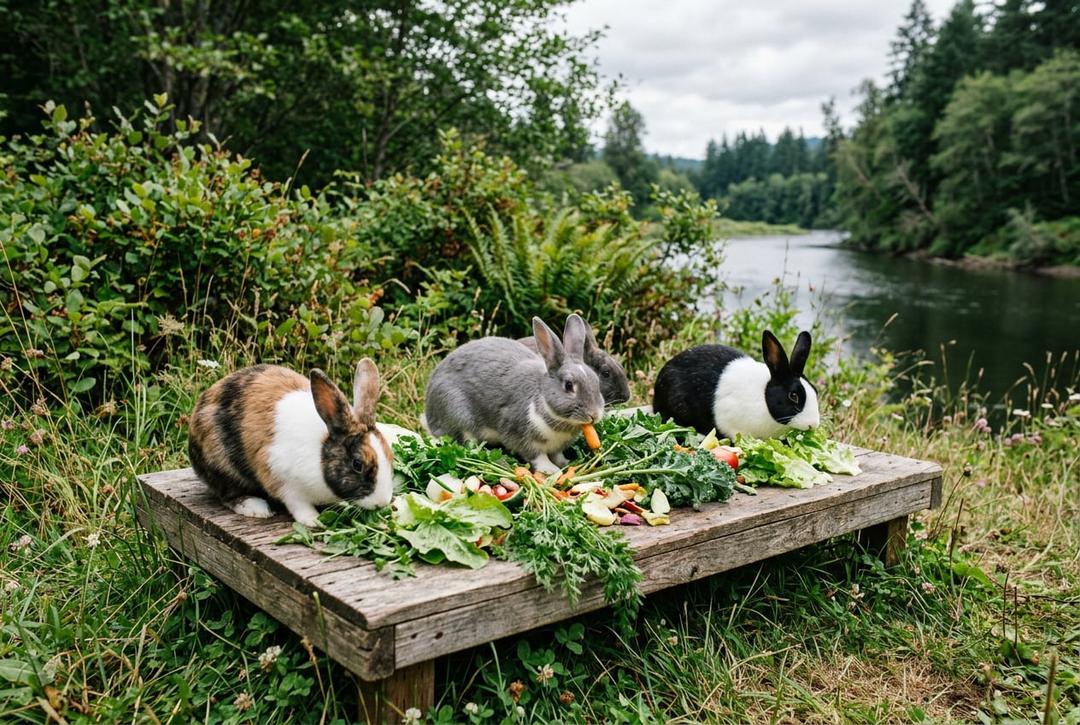
Grocery stores and restaurants already throw out tonnes of fresh produce. A donation program puts it to use at set feeding sites on the island, instead of people feeding rabbits in City parks, which draws rats and is already against the bylaw.
5. Open it to visitors
Rabbit islands draw visitors elsewhere in the world. Okunoshima in Japan is the best-known example. A boardwalk, a few cleared viewing areas and a ticketed shuttle could turn the island into a place families visit. Ticket and sponsorship revenue would pay for the care, and the people who care most about the rabbits would get a way to help instead of a reason to protest.
6. Adopt one off the island
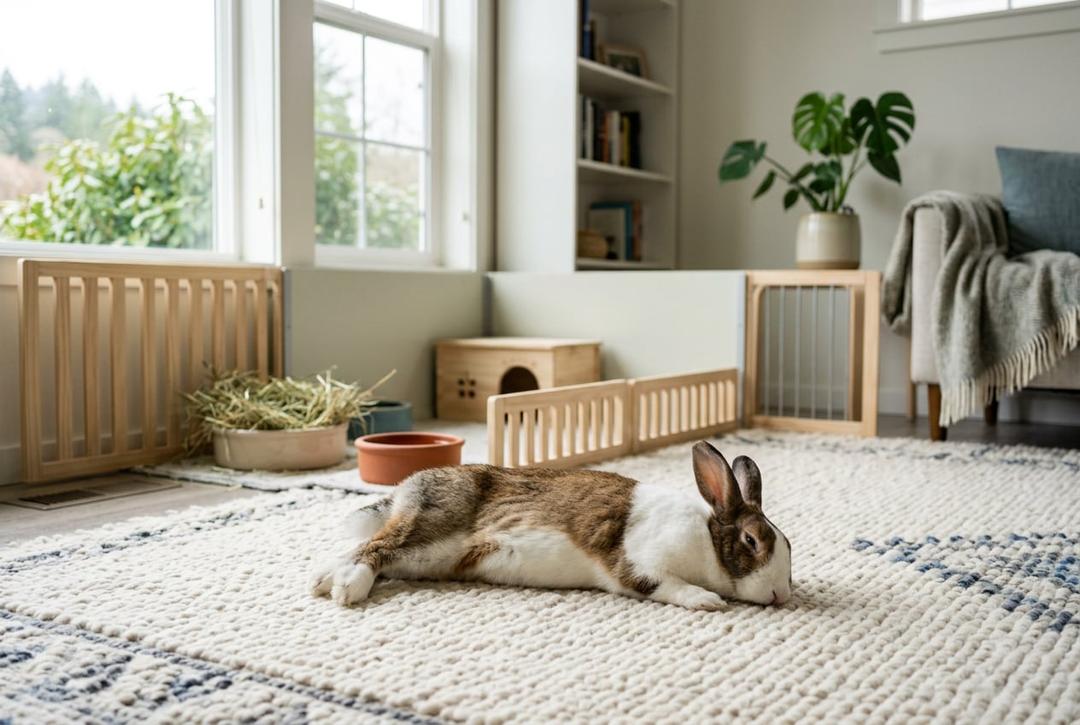
Some visitors will keep coming back to see the same rabbit. Over time, the rabbits that spend the most time around people get used to them and start eating from their hands. Those rabbits make the best pets, and the people who have bonded with them make the best owners.
So let visitors adopt them. A visitor picks the rabbit, pays an adoption fee, and the rabbit is spayed or neutered, given time to heal and then delivered to its new home. Since 2022, moving a feral rabbit into a home no longer needs a provincial permit. The fee pays for the surgery. Each adoption takes a rabbit off the island and turns a visitor into a responsible owner, and it meets the same sterilize-before-adoption standard we want Richmond to make law.
7. Close the tap
None of this ends unless new pets stop arriving. Richmond's pet store ban doesn't reach breeders or online sales. Richmond should require rabbits to be sterilized before they are sold or given away, as Kelowna already does and as the BC SPCA urges municipalities to do. It should enforce the feeding ban, and it should push for matching rules across Metro Vancouver.
The objections, and our answers
Any plan to put an invasive species anywhere will draw objections. These are the ones we expect, and why we don't think they hold.
- "It's a conservation area." The Nature Conservancy of Canada looks after the conservation lands around Sea Island, Swishwash included, and nothing happens there without its agreement. But Swishwash is not an ancient ecosystem. It was largely built up from Fraser River dredgings in the 1950s, and it has no historical ecology to protect. If there is one place in the Lower Mainland where an invasive species could be held on purpose, it is a man-made island that is only decades old. Putting rabbits there takes them off the farmland, parks and native habitat that do need protecting.
- "It's next to the airport." Birds of prey are already part of life at YVR. The airport sits on a delta of tidal flats with birds everywhere, and its grassy areas draw hawks and owls all year, which is why the airport runs constant hazing programs. Raptors already use Swishwash. A rich, steady food source on the island, across the water from the runways, could give hunting birds a reason to stay off the airfield. That is worth studying with YVR's wildlife team, and it could work in the airport's favour.
- "Provincial rules ban releasing rabbits into the wild." They do. They also let feral rabbits be moved to a sanctuary without a permit, and a contained island run as a managed site fits that intent better than any patch of mainland. The real choice in front of the Province and the City is between two costs. One is catching each rabbit, housing it, operating on it and caring for it for life. The other is moving rabbits once, without surgery, into a space they can't leave, at a fraction of the cost.
- "Rabbits can swim." They can, a little. The channel between Richmond and Swishwash is about 200 metres wide, and the Fraser runs with a strong current most of the time. A rabbit with food, cover and no reason to leave isn't going to cross that. Regular counts on both shores will confirm it.
If Swishwash Island somehow isn't available, the model still works on any contained site of the right size near the city. What matters is the design: capture city-wide, house them close by on ground that limits their numbers on its own, fund the care through people who love rabbits, and shut off the source.
The bottom line
Richmond's rabbit problem is stuck because every option on the table forces the City to pick a side. This one doesn't. Nobody is culling rabbits. Neighbourhoods, schools and gardens get their ground back. And the people who care about the rabbits get a place to see them thrive.
We work on human-wildlife conflict for municipalities, stratas and institutions across BC. If you manage land in Richmond and want to talk through how this could work, get in touch.
Sources
- City of Richmond, Report to Committee: Feral Rabbit Management Program (March 10, 2023): https://citycouncil.richmond.ca/__shared/assets/2-_Feral_Rabbit_Management_Program68772.pdf
- BC Ministry of Forests, Changes to B.C.'s Wildlife Act will help control feral rabbits (June 23, 2022), included as Attachment 1 of the City report above
- City of Richmond, Pilot Program for the Humane Capture of Feral Rabbits, CanadaBuys BC8585Q (May 2026): https://canadabuys.canada.ca/en/tender-opportunities/tender-notice/bc8585q
- Richmond Sentinel, City proposes feral rabbit management strategy (February 28, 2022): https://richmondsentinel.ca/article-detail/22092/city-proposes-feral-rabbit-management-strategy
- Vancouver Sun, Help wanted: Richmond seeks experienced trapper as bunny population booms (May 2026): https://vancouversun.com/news/help-wanted-richmond-seeks-experienced-trapper-as-bunny-population-booms
- The Tyee, Overrun with Buns (January 27, 2023): https://thetyee.ca/News/2023/01/27/Overrun-With-Buns/
- City of Richmond, Report to Committee: 2022 Feral Rabbit Update (February 2, 2022): https://citycouncil.richmond.ca/__shared/assets/1-_2022_Feral_Rabbit_Update61228.pdf
- City of Richmond Archives, Island City by Nature: Richmond's islands (2017): https://richmondarchives.ca/2017/05/04/island-city-by-nature-richmonds-islands/